
Is a Slow Pump Normal or a Problem?
A gas pump that suddenly flows much slower than usual is usually a sign of a station-side issue, not a problem with your car. Normal pumps deliver around 8 to 10 gallons per minute, so a typical 12-gallon fill takes well under two minutes. If the meter is crawling and you can hear the pump straining, something between the underground tank and the nozzle is restricting flow. Most causes are harmless to your car, but a few are worth knowing about.
The good news is that you are not stuck. In almost every case, the fix is as simple as moving to a different pump or a different station. The guide below runs through the seven most common reasons, from the everyday to the rare.
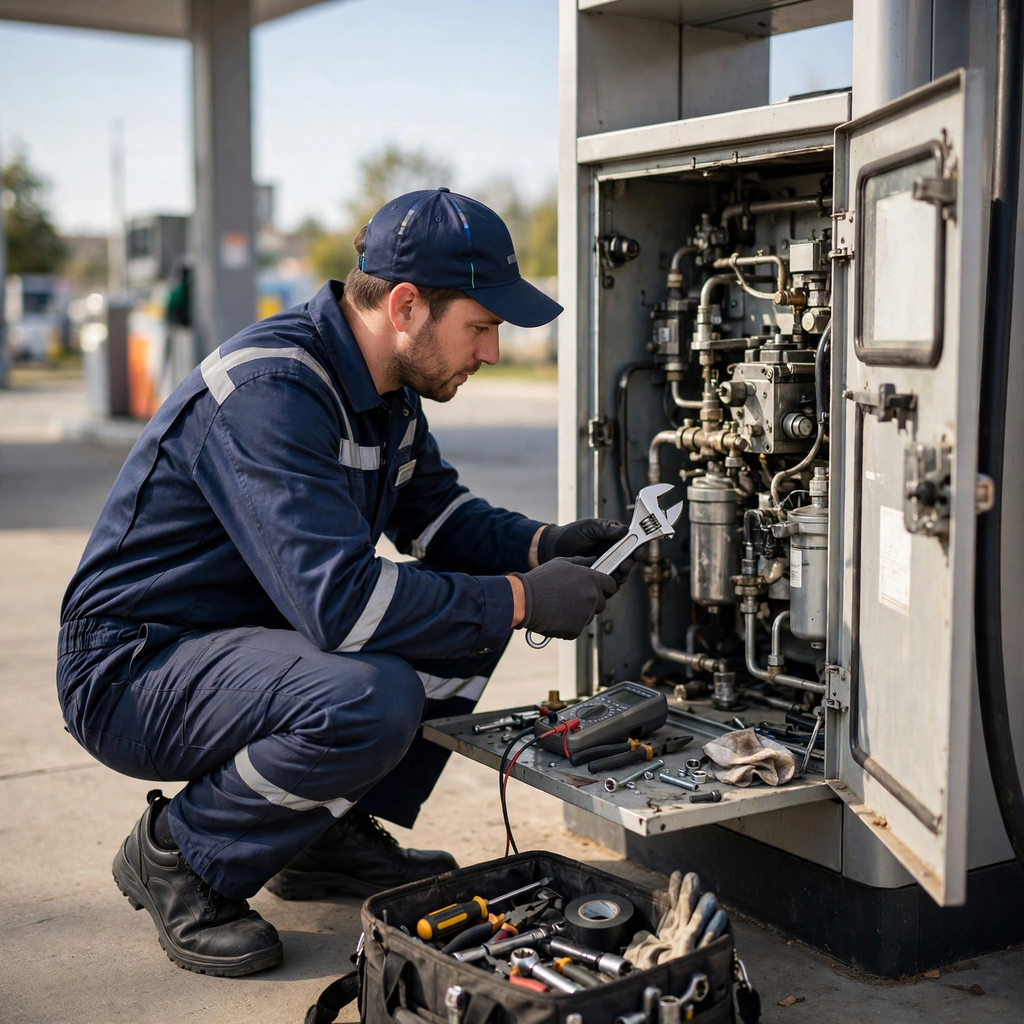
1. The Underground Tank Is Running Low
The most common cause of a slow pump is a station tank that is nearly empty and waiting for a fuel delivery. When the fuel level drops low, the pump has to work harder to draw fuel up, and flow slows to a trickle. This often happens at busy stations late in the day before the tanker arrives, or at rural stations with infrequent deliveries. If every pump at the station is slow, a low tank is the likely culprit, and the attendant can usually tell you when the next delivery is expected.
2. A Clogged Pump Filter
Every pump has a filter that catches sediment and debris, and a filter that is overdue for a change chokes the flow. Filters are a maintenance item, and stations that fall behind on filter changes get slow pumps. This usually affects one or two pumps rather than the whole station, which is your clue: if the pump next to you is flowing fine and yours is crawling, a clogged filter is a strong suspect. Mention it to the attendant, since a clogged filter is their problem to fix, not yours.
3. Cold Weather Thickens Everything
Fuel flows more slowly in very cold weather, and winter-blend additives can make the effect more noticeable. You will feel this most on bitterly cold mornings, especially at stations where the above-ground equipment is exposed. The slowdown is normal physics, not a malfunction, and flow returns to normal as temperatures rise. If you are fueling in freezing weather, give the pump a few extra seconds before assuming something is wrong.
4. Your Prepay or Authorization Limit
Some pumps slow down as you approach a prepay limit or a card authorization cap, and pay-at-pump transactions carry hidden limits. Many stations authorize cards for a fixed amount, often $75 to $125, and the pump may taper the flow as it nears the cap. If you prepaid cash inside for a set amount, the pump slows near the end of that amount by design. When the pump stops well short of a full tank, go back inside and ask for the transaction to be run again or pay a different way.
5. A Worn or Underpowered Pump
Older pumps with worn motors or electrical issues simply cannot push fuel at full speed anymore. You can sometimes hear this one: a healthy pump hums steadily, while a struggling pump whines, clicks, or cycles. Stations usually know which of their pumps are tired, and a quick word with the attendant will confirm it. This is another case where switching pumps solves it instantly.
6. Vapor Recovery and Flow Restrictors
Modern pumps include vapor recovery systems and leak-detection hardware that can restrict flow when they sense a problem. If the system detects a possible leak or a vapor issue, it may throttle the flow as a safety measure. A kinked or twisted hose can have a similar effect by physically narrowing the path. Straighten the hose and reseat the nozzle, and if the flow does not recover, treat it as a pump issue and move on.
7. The Station Is Throttling Flow on Purpose
In rare cases, stations intentionally slow pumps during fuel deliveries or system maintenance. When a tanker is actively dropping fuel into the underground tanks, stirring up sediment, some stations reduce pump speed to keep that sediment out of customers’ tanks. This is actually protective, and the attendant will usually tell you if a delivery is in progress. If you see a tanker parked over the fill ports, consider coming back later.
What to Do About a Slow Pump
Try another pump first, tell the attendant second, and leave third. Move to a different pump and compare the flow; if the new pump is fine, the problem was isolated and you can finish your fill. If all pumps are slow, ask the attendant whether the tanks are low or a delivery is coming. Do not keep squeezing a trickling nozzle for ten minutes out of stubbornness. Your time is worth more than the loyalty to one station, and our cheap gas guide will help you find the next cheapest option nearby. If a pump ever smells strongly of fuel, leaks, or behaves erratically, stop fueling and tell the attendant immediately.
How fast should a gas pump flow?
A normal pump delivers roughly 8 to 10 gallons per minute, so a 12-gallon fill should take under two minutes. Anything dramatically slower deserves a different pump.
Can a slow pump damage my car?
No. Slow flow is a delivery problem, not a fuel quality problem, and it does not harm your engine or fuel system. The one exception is fueling during an active tanker delivery, when stirred-up sediment is a slight concern.
Why does the pump slow down near the end?
That is usually the prepay or authorization limit tapering the flow, which is normal. If it slows dramatically with plenty of room left on your authorization, suspect a filter or tank issue instead.
Should I tell the station about a slow pump?
Yes. A clogged filter or worn pump is a maintenance issue the station needs to know about, and attendants can usually confirm whether the tanks are low or a delivery is expected.
Facts verified October 2026. Pump equipment and station policies vary by location.