
Find an Ethanol-Free Gas Station Near You
Looking for ethanol-free gas near you? The most reliable way to find it is the pure-gas.org directory, a crowdsourced list that currently tracks 17,980 stations selling ethanol-free gasoline across the U.S. and Canada, updated weekly. Pick your state on their site to see every listed station, then call ahead — commenters note that stations can stop carrying E0 without warning, so a quick call saves a wasted trip.
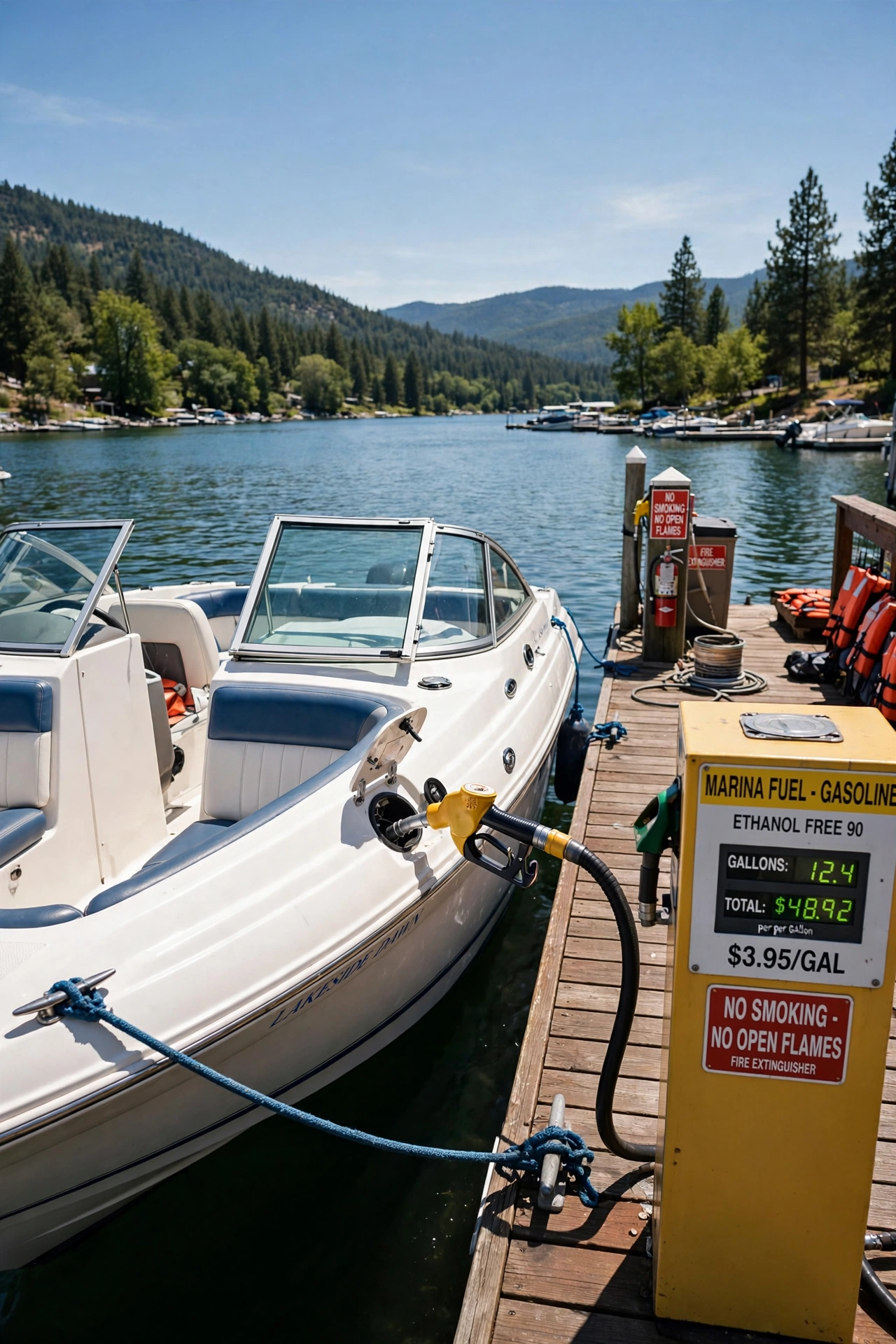
Marinas and boat-fuel docks are another dependable source: most sell ethanol-free fuel because ethanol and boat engines don’t mix. Some travel stops and independent stations also carry it, and GasBuddy’s fuel-type filter can surface ethanol-free options in some regions.
What Is Ethanol-Free Gas?
Ethanol-free gas — often labeled E0, “pure gas,” or “non-ethanol” — is gasoline with no ethanol blended in. Standard pump gas in the U.S. is E10 (10% ethanol), and flex-fuel E85 is up to 85% ethanol. Ethanol-free is simply 100% gasoline.
It’s typically sold as regular (87 octane) or as a premium grade (89, 91, or 93 octane) at marinas and specialty stations. Because it skips the ethanol, it contains roughly 3% more energy per gallon than E10, which translates into slightly better fuel economy.
Why Drivers Seek Out Ethanol-Free Gas
For most daily drivers, E10 works fine. Ethanol-free earns its keep in situations where ethanol causes real problems:
- Boats and marine engines — ethanol absorbs water from humid air, which can cause phase separation in fuel tanks and damage marine engines. Most boaters run E0 exclusively.
- Small engines — lawn mowers, chainsaws, trimmers, and leaf blowers have fuel lines and carburetors that ethanol degrades over time. Ethanol-free gas significantly extends their life.
- Classic and collector cars — older fuel systems weren’t designed for ethanol, and these cars often sit for months between drives.
- Seasonal equipment — generators, snow blowers, and anything stored with fuel in the tank. E10 starts breaking down in as little as 30 days; E0 stores far better.
- Slightly better mileage — with ~3% more energy per gallon, expect 2–3% better fuel economy in most vehicles. Small, but real.
Is Ethanol-Free Gas Worth the Extra Cost?
Ethanol-free gas almost always costs more per gallon than E10 — typically 25 cents to over a dollar more depending on the state and station. The honest math:
| Fuel | Typical price | Energy per gallon | Best use case |
|---|---|---|---|
| E10 (regular) | Cheapest | Baseline | Daily driving |
| E0 (ethanol-free) | +25¢–$1+/gal | ~3% more | Boats, small engines, classics, storage |
For a daily driver, the small MPG gain rarely offsets the higher price — you’re paying a premium mostly for engine-friendliness, not savings. Where E0 clearly wins is equipment that ethanol actively damages: one ruined carburetor or fuel pump costs far more than a few extra cents per gallon ever will.
Ethanol-Free Gas Availability by Region
Availability is uneven. Ethanol-free gas is easiest to find in the Southeast and Midwest, where many independent stations and marinas carry it, and around boating and agricultural communities nationwide. It’s scarce in some western states — California, for example, has very few E0 stations due to its fuel regulations.
The pure-gas.org directory is the fastest way to check your specific area: listings are organized by state and province, and the site notes when stations were added or removed. When you’re traveling, check along your route before you leave — and keep a backup station in mind, since small rural stations sometimes run out.
Ethanol-Free Gas FAQs
What is ethanol-free gas called at the pump?
Look for pumps labeled “ethanol-free,” “E0,” “non-ethanol,” or “pure gas.” Some stations list it as “recreational fuel” (REC-90), which is typically a 90-octane ethanol-free blend aimed at boats and small engines.
Is ethanol-free gas better for my car?
It’s gentler on fuel systems and gives slightly better mileage, but for a modern daily driver running E10, the difference is marginal. It’s meaningfully better for older cars, anything that sits unused, and all small engines.
Does ethanol-free gas improve MPG?
Yes, by roughly 2–3% in most vehicles, because a gallon of E0 contains about 3% more energy than a gallon of E10. It’s real but modest — not enough to offset the higher per-gallon price on fuel-economy grounds alone.
Can any car use ethanol-free gas?
Yes. Any gasoline vehicle can run E0 — it’s simply gasoline without the ethanol additive. (Don’t confuse it with E85, which is mostly ethanol and only works in flex-fuel vehicles.)
Where can I find the cheapest ethanol-free gas near me?
Start with the pure-gas.org state listings to find stations, then compare prices the old-fashioned way — ethanol-free prices aren’t well covered by gas-price apps, so calling a few stations is often the fastest route to the cheapest fill-up.
Also on This Site
- E85 Gas Stations Near Me — find flex-fuel stations and check if your vehicle can use E85
- Diesel Gas Stations Near Me — diesel and truck stop locations near you
- Cheap Gas Near Me — how to consistently find the lowest gas prices in your area
Station counts from pure-gas.org, checked October 2026. Availability changes frequently — call ahead to confirm.