
What a Skimmer Is
The safest way to pay at a gas pump is to tap or insert a chip card, use a credit card instead of PIN debit, or pay inside. That one choice limits what a thief can steal even if you miss a hidden device.
A skimmer is an illegal card reader fitted to a payment terminal. It copies data from the magnetic stripe on a credit or debit card without the driver knowing. Criminals may sell the stolen data or use it to buy things online. The Federal Trade Commission warns that you may not know your information was stolen until you get your statement or an overdraft notice.
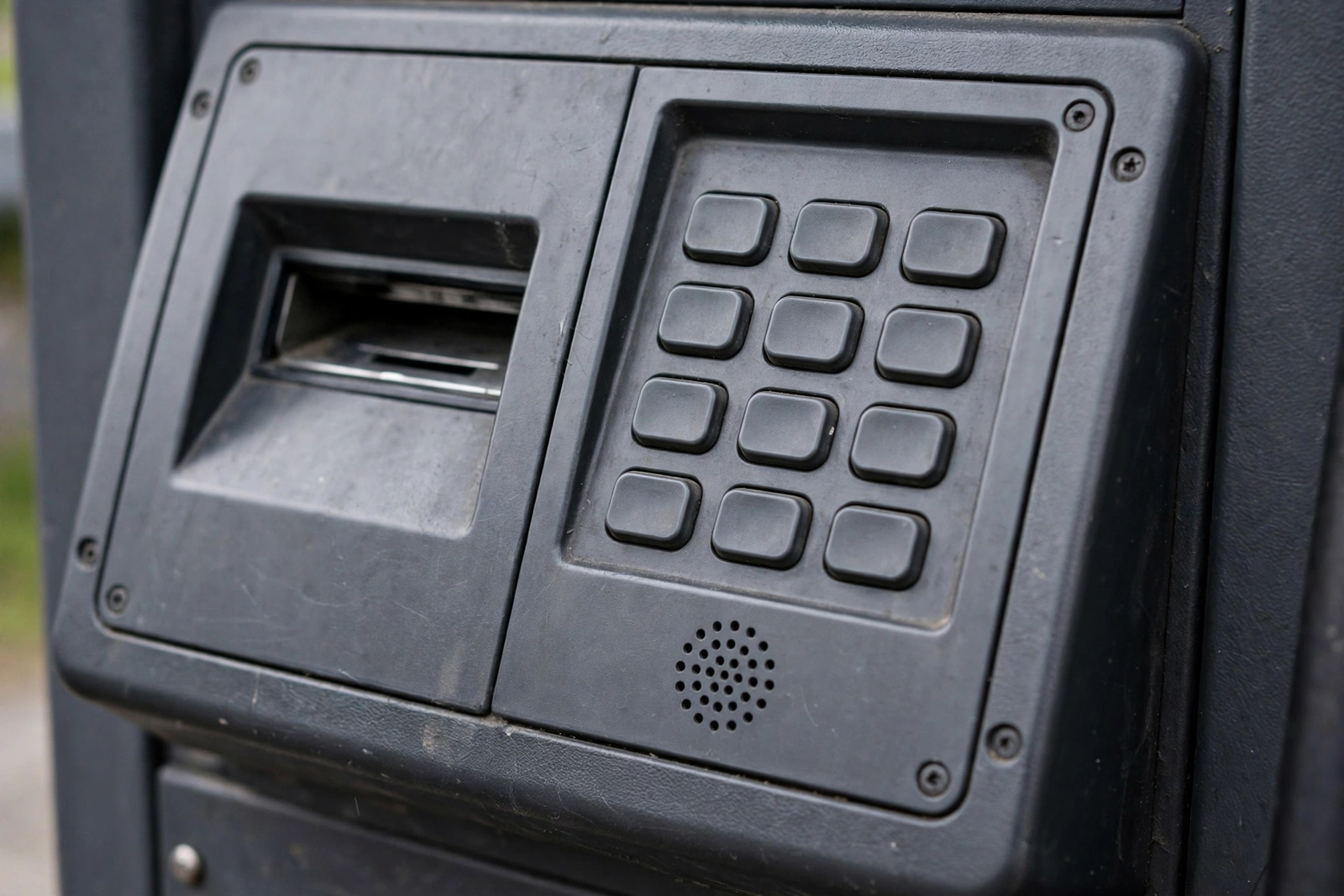
Skimmers have gotten smaller and harder to find. Some sit over the outside reader, some are hidden inside the pump, and some work with a tiny pinhole camera or fake keypad that records a PIN. No single visual check catches every device, so pair a short inspection with a safer way to pay.
How to Spot a Skimmer
Take ten seconds before you insert a card. Many stations put a security seal over the cabinet panel. If the panel has been opened, the seal will read void. Do not use that pump. Tell the attendant.
Next, compare the card reader with readers on nearby pumps. A skimmer often looks bulkier, looser, crooked, damaged, or just different. The US Secret Service advises looking for anything loose, crooked, damaged, or scratched. Give the reader a gentle wiggle first. Real readers are sturdy, so if it moves, do not use it. Report it and move to another pump.
Watch the chip slot too. If your card does not slide in smoothly, or the slot looks blocked or jammed, do not force it in and do not switch to swiping. A blocked slot can be a trick to push you toward the magnetic stripe, which is easier to copy. Look around the keypad for anything that could hide a small camera, and cover the keypad with your free hand whenever you enter a PIN.
Pump choice helps too. Pumps in clear view of staff are harder to tamper with unnoticed than pumps around a corner or in a dark, isolated spot. If uneasy, pay inside.
Tap Versus Insert Versus Swipe
Swiping is weakest because it reads the magnetic stripe, the data skimmers copy. Inserting a chip card is stronger because the chip is harder to copy. Tapping is also stronger, and phone wallets add another layer by sending a unique code for that transaction instead of your actual card number.
Tap or chip does not make you immune, since internal skimmers can be hidden inside a pump. Tap or chip first, and check statements after any fill where something felt off.
| Payment method | Risk at the pump | Best use |
|---|---|---|
| Tap or phone wallet | Lower | First choice |
| Chip insert | Lower than swiping | Good backup |
| Magnetic stripe swipe | Higher | Avoid at pumps |
| PIN debit at the pump | Higher, exposes PIN and bank account | Avoid at pumps |
| Pay inside or cash | Lower for pump skimmers | Good fallback |
Why to Avoid PIN Debit at the Pump
The FTC advises this directly: if you use a debit card at the pump, run it as a credit card instead of entering a PIN. That keeps your PIN safe and means money is not deducted immediately from your account as with a debit transaction. If credit is not an option, cover your hand when entering your PIN, in case a tiny pinhole camera is above the keypad.
Credit cards also carry stronger protection. If only your credit card number is used, and the card itself is not lost or stolen, the FTC says you are not responsible for charges you did not authorize. Debit protection depends much more on how fast you report. That alone makes credit safer at a pump.
What to Do If You Think You Were Skimmed
Act fast, in this order. First, tell the attendant or manager so the pump can be taken out of service and checked. Second, call your bank or card issuer, freeze or replace the card, and ask what transactions are pending. Third, check statements and set up transaction alerts. Fourth, dispute any unauthorized charges through your issuer and keep dates, amounts, and reference numbers.
Speed matters most with debit cards. Under FTC summarized federal law, report before any unauthorized charges and you owe nothing. Report within 2 business days after learning of the loss and your maximum loss is 50 dollars. Report after 2 business days but within 60 calendar days after your statement is sent and it is 500 dollars. Wait longer and you can owe all money taken, and possibly more from linked accounts. For a card number used without the card being lost, report within 60 calendar days after the statement.
If you suspect identity theft beyond one card, the FTC points people to IdentityTheft.gov for a recovery plan. You can also report to local police. Do not try to remove a suspected internal device yourself.
FAQ
Can I always spot a skimmer by looking?
No. External skimmers can often be spotted by a loose reader or broken void seal, but internal skimmers are hidden inside the pump.
Is tap to pay safe at a gas pump?
Tap and chip are safer than swiping because they do not rely on the magnetic stripe in the same way. No method is perfect, so still check your statements.
What should I do first if I see a void seal?
Do not use that pump. Tell the attendant, use a different pump or pay inside, and note the pump number if you can do so safely.
Facts verified October 2026. Payment and liability rules summarized here are general US consumer rules. Your issuer may offer stronger zero liability protection, so check your card terms as well.