
Cash Wins at the Pump, Unless Your Card Beats It
Paying cash saves 5 to 10 cents per gallon at stations that offer a cash discount, but a rewards card paying 2 to 5 percent back on gas often saves more. The right choice comes down to the size of the cash discount at your station and the rewards rate on your card. At most stations, a good rewards card used responsibly wins the math.
Why Some Stations Charge Two Prices
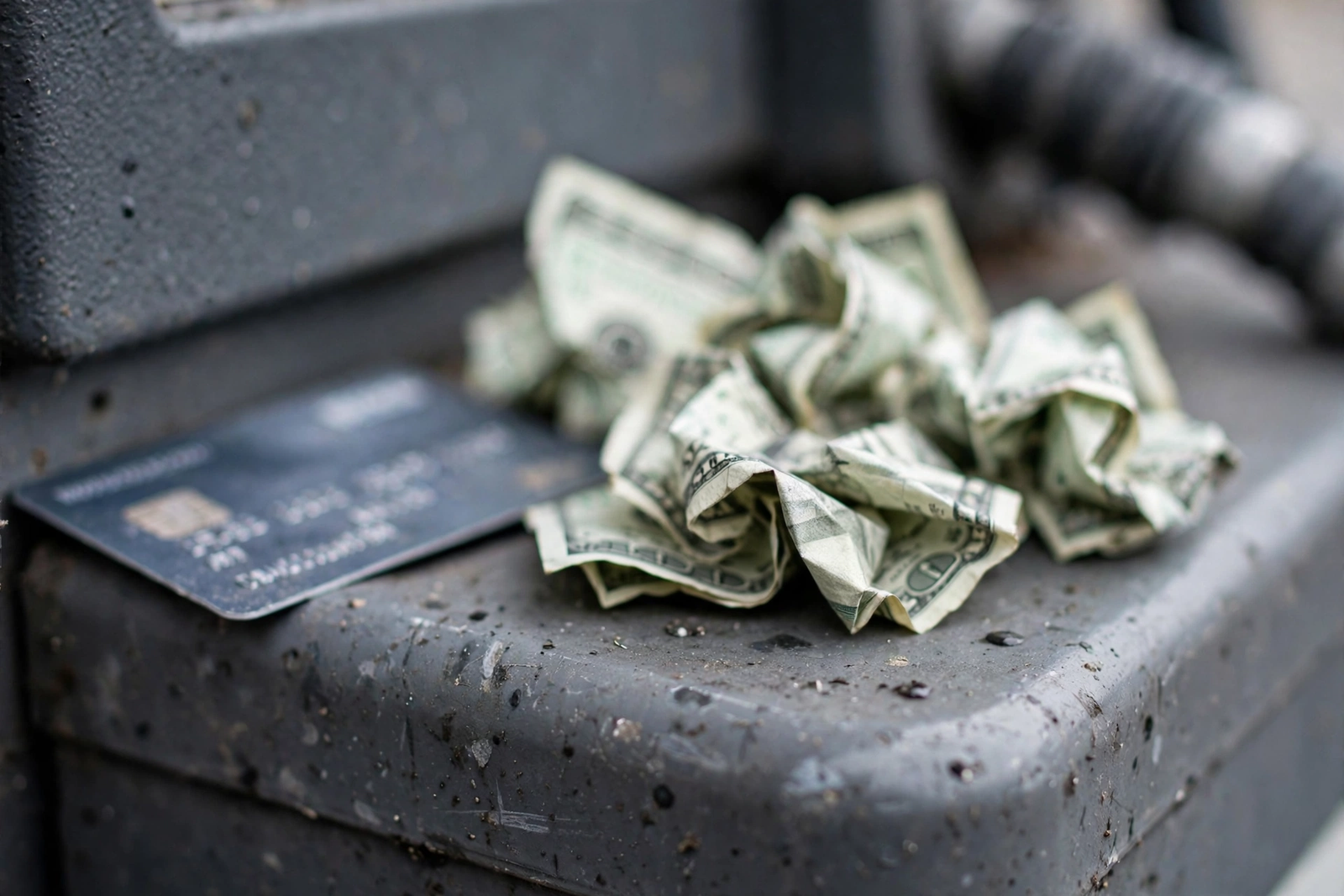
Many stations, especially independents, post both a cash price and a credit price on their signs. The credit price runs about 5 to 10 cents per gallon higher. The reason is simple: card companies charge the station a processing fee on every swipe, and station margins are thin, sometimes just a few cents per gallon. Stations that give cash customers a discount are passing part of those avoided fees back to you. In most states, stations are legally required to show the higher credit price on the roadside sign at least as prominently as the cash price, so watch the pump screen, not just the sign.
Do the Math: When the Card Wins
Take a station where regular is $4.00 cash and $4.10 by credit, a typical 10 cent gap. A rewards card paying 5 percent back on gas earns you 20.5 cents per gallon in rewards on the credit price, which leaves your effective price just under $3.90 per gallon. That beats the $4.00 cash price by about a dime per gallon. Even a 2 percent card earns about 8 cents back, nearly erasing the cash advantage. The card wins whenever your rewards per gallon exceed the cash discount.
When Cash Is the Smarter Play
Cash wins in three situations. First, if the cash discount is large, some stations charge 50 cents to a dollar more per gallon for credit, a gap no rewards card can close. Second, if you carry a balance on your card, interest charges wipe out rewards fast, and cash keeps you honest. Third, if your card only earns 1 percent on gas, the 4 cent reward rarely covers a 10 cent cash discount. Cash also works at every station, including the few that are cash only.
The Hidden Cost: Pre-Authorization Holds
One more factor tilts the scales. When you pay by card at the pump, the station places a pre-authorization hold on your account, often $75 to $175, before you start pumping. The hold is released after the real charge posts, but it can tie up your available balance for a day or more. Debit card users feel this most, since the hold locks up actual bank funds rather than credit line. Cash has no hold at all, you prepay inside for the amount you want and drive away clean. If your checking account runs tight between paychecks, this alone can make cash the safer choice.
Station loyalty apps offer a middle path. Many branded station apps let you pay from your phone with a linked bank account or card, sometimes unlocking app only per gallon discounts without a plastic swipe. You can find major brands near you with our guides to Sinclair and Gulf stations. These discounts are usually modest, a few cents per gallon, but they combine with the convenience of paying at the pump.
Debit Cards and Other Traps
Do not assume debit gets you the cash price. Most stations bill debit transactions at the credit price, so check before you swipe. Also beware stations that hide the price gap in fine print at the pump while the big sign shows only the low cash price. The practice is legal in most states as long as both prices are disclosed, but you should never pay the credit price expecting the cash one. Finally, compare the cash price itself: a station with a cash discount is not automatically the cheapest station. A nearby station’s single price may still beat it. Compare with our cheap gas guide, and consider a gas rewards credit card that pays 2 to 5 percent back if you pay your balance in full each month.
How common are cash discounts at gas stations?
They are common at independent stations and in areas with heavy price competition, and rare at big branded stations that charge one price. If the sign shows two prices, the lower one is the cash price.
Do debit cards get the cash price?
Usually not. Most stations treat debit like credit and charge the higher price. A few stations discount debit too, so check the pump labels before paying.
Is the credit card price a surcharge or is the cash price a discount?
Legally it is usually framed as a cash discount, which matters because some states restrict outright surcharges. From your wallet’s perspective they are the same thing: card users pay more per gallon.
Which saves more overall, cash or rewards cards?
For most drivers who pay their card in full, a card earning 2 to 5 percent on gas saves more than a typical 5 to 10 cent cash discount. Find stations near you and compare their cash and credit prices before you commit to either method.
Facts verified October 2026. Prices, taxes, and app terms change over time and vary by state.