
Start With K-1, and Only K-1, for Heaters and Lamps
For indoor kerosene heaters, lamps, and wick stoves, buy only fuel labeled K-1 or 1-K kerosene. K-1 is the highly refined, low sulfur grade, with a maximum sulfur content of 0.04 percent by weight, and it burns cleaner with less odor and soot. K-2 has higher sulfur, up to 0.30 percent by weight, and suits industrial or properly flued appliances. Burning K-2 in an unvented indoor heater can raise sulfur dioxide emissions and foul the wick faster. If the label does not say K-1, do not assume it is the right fuel.
Clear K-1 is the easiest to check for contamination, since dirt or water shows up in a clear fuel. Dyed red kerosene can still be K-1, and the dye marks fuel not intended for road use, but clear fuel makes inspection simpler. When in doubt, ask the seller for the grade in writing on the receipt or pump label.
Where to Buy Kerosene Near You
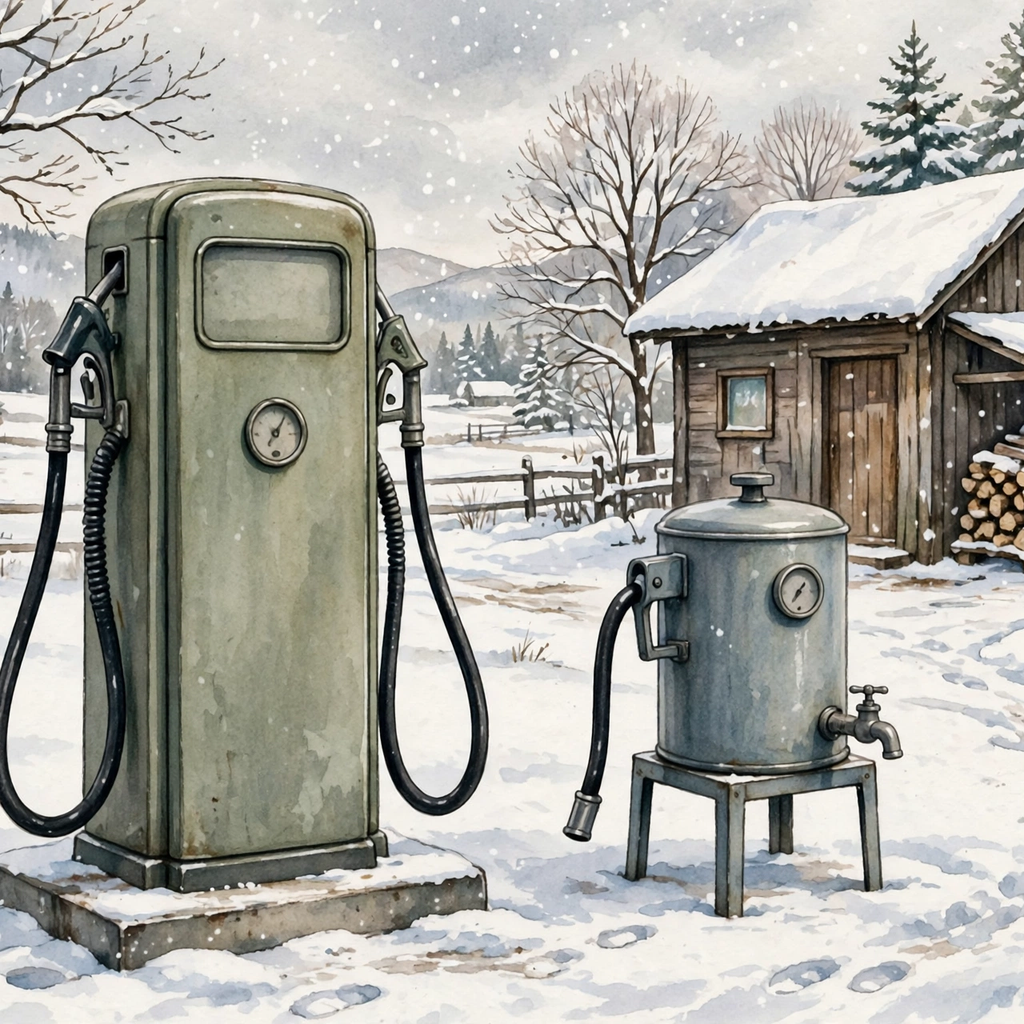
Kerosene at a pump is getting rarer, so check hardware stores, farm supply stores, fuel distributors, and select gas stations, and call ahead every time. Dedicated kerosene pumps are usually separate from the gasoline and diesel islands, with a distinct nozzle and a K-1 label. Some regional chains and truck stops in colder areas still run them, while many national chains do not stock kerosene at the pump at all. Inventory swings fast because kerosene is a low volume product, so a station that had it last winter may not have it this winter.
Hardware and home stores sell prepackaged K-1 in one gallon and five gallon containers. Pump fuel is usually cheaper per gallon than packaged fuel, but packaged fuel often has a longer shelf life and suits a heater you keep only for emergencies. Fuel distributors with public depot access are another option for larger quantities. Search for kerosene plus your town, then phone the location and confirm grade, container rules, and current stock before you drive.
Containers, Storage, and Shelf Life
Store kerosene only in a clean, sealed container marked for kerosene, in a cool, dark, dry place away from living areas. Kerosene traditionally goes in a blue container, distinct from red gasoline cans, and that color code helps prevent a dangerous mix up. Never store it in a used milk jug, a food container, or an old gasoline can, since residue contaminates the fuel and can damage a heater wick. Keep the cap tight after filling the heater, and keep containers away from furnaces, water heaters, and other ignition sources.
Kerosene does not keep forever. Pump kerosene stored well generally lasts months, and packaged kerosene tends to keep longer, but old or contaminated fuel can clog wicks and burn poorly. If fuel looks cloudy, smells off, or has visible water or sediment, do not run it through a heater. Buy fresh fuel and dispose of the old fuel through your local hazardous waste program rather than pouring it out or burning it off.
Using a Kerosene Heater Safely
Follow the heater manual exactly, ventilate the room, and never leave a kerosene heater running unattended or while you sleep. Most unvented heater guidance calls for a cracked window or door for fresh air, and a working carbon monoxide alarm in the home is a sensible backup even when you follow the ventilation rules. Keep the heater away from curtains, bedding, and foot traffic, and let it cool fully before refueling. Refuel outdoors, never while the heater is hot or running.
Change wicks on the schedule the manual gives, and trim or replace a wick that burns unevenly or smokes. A heater that soots heavily, smells strongly, or flames unevenly is telling you something is wrong with the fuel, the wick, or the ventilation. Stop using it until you find the cause. Kerosene heaters are a supplemental heat source, not a replacement for a serviced furnace, and they deserve the same respect as any open flame appliance in a home.
What Kerosene Costs, Without Guessing Your Town
Pump kerosene is usually far cheaper per gallon than prepackaged hardware store kerosene, but local prices move with season and supply, so compare before you buy. Packaged fuel carries packaging and retail markup, which is why a gallon in a tin can cost several times the pump price. If you burn kerosene all winter as supplemental heat, finding a pump source is worth real money. If you need one gallon for an emergency heater, the packaged jug is simpler and the premium is small in absolute terms. Either way, buy K-1, keep the receipt, and note the seller in case a bad batch needs tracing.
What is the difference between K-1 and K-2 kerosene?
K-1 is low sulfur and refined for indoor heaters and lamps. K-2 has higher sulfur and suits industrial or flued appliances. Use only K-1 in an unvented indoor heater.
Do gas stations sell kerosene?
Some do, from a dedicated pump separate from gasoline and diesel, but many do not. Availability varies by region and by location, so call ahead and ask for K-1 by name.
How should I store kerosene?
In a clean, sealed blue container marked for kerosene, in a cool, dark, dry place away from living areas and ignition sources. Never use a food container or an old gasoline can.
Can I use diesel or gasoline in a kerosene heater?
No. Use only the fuel the heater manual specifies, which for most portable heaters is K-1 kerosene. The wrong fuel can damage the heater and create a safety hazard.
Facts verified October 2026. Availability, grades, and prices vary by location, and heater manuals take priority over general guidance.