
The One Rule: Do Not Start the Engine
If you put diesel in a gasoline car, do not start the engine or even turn the ignition on. Call roadside assistance and have the car towed to a mechanic for a tank drain and flush. This single decision is the difference between a straightforward drain job and an expensive fuel system repair. With the engine off, the diesel is still sitting in the tank and has not circulated anywhere it can do real harm.
Push the car to a safe spot away from the pumps if you can do so without starting it. Then call for a tow. A professional drain and flush typically takes a few hours, and once the tank is clean and refilled with gasoline, a car that was never started usually needs no further repair.
What Diesel Does Inside a Gasoline Engine
Diesel and gasoline ignite in completely different ways, so a gas engine cannot burn diesel properly. Gasoline engines use spark plugs to ignite a fine mist of fuel. Diesel is heavier and oilier, and it is designed to ignite under extreme compression, not from a spark. When diesel reaches a gasoline engine, it coats the spark plugs and throws off the whole ignition process because it never burns cleanly.
If you start the engine with diesel in the tank, expect rough running, misfiring, and a cloud of white or gray smoke from the exhaust, followed by a stall. A car can even seem to run normally for a short while on the gasoline already in the fuel lines before the diesel reaches the engine, which tricks some drivers into thinking everything is fine. It is not. The longer it runs, the deeper the contamination spreads through the fuel lines, injectors, and filters.
How the Fix Works and What It Costs
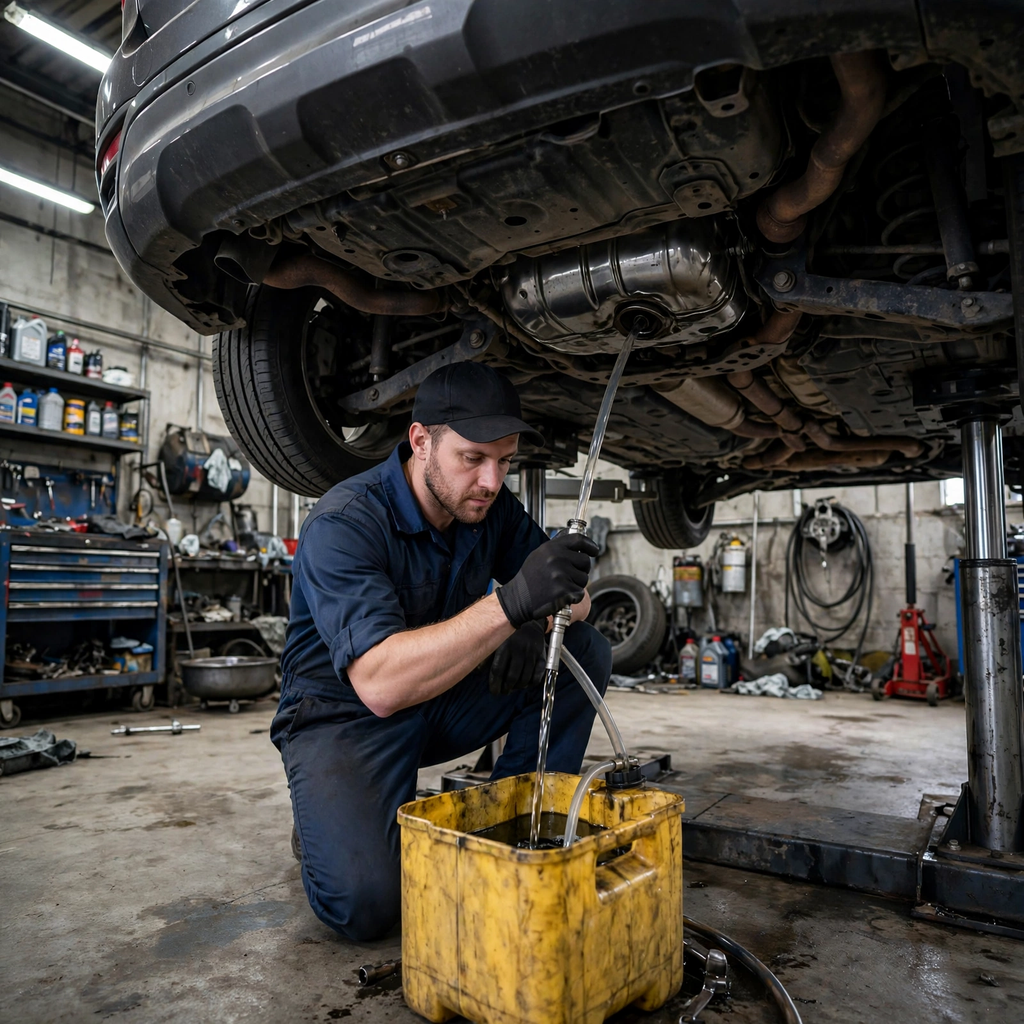
The standard fix is a full drain and flush of the fuel tank, which is routine work for any mechanic. If your car has a drain plug on the tank, the mechanic opens it, empties the contaminated fuel into an approved container, then adds fresh gasoline and drains it again, repeating until the diesel is gone. If there is no drain plug, the tank has to come out of the car to be emptied and rinsed, which adds labor time.
Cost depends almost entirely on whether you started the engine. If you caught it at the pump and never turned the key, expect a drain-and-flush bill in the low hundreds of dollars as of 2026, plus the tow. If you drove on the contaminated fuel, the fuel system may need a full flush, new filters, and possibly injector work, and the bill can climb into the thousands. Check your insurance policy too, since some comprehensive plans cover misfueling under accidental damage.
Gas in a Diesel Is the Worse Mistake
Putting gasoline in a diesel vehicle is more destructive than the reverse, because gasoline strips away the lubrication diesel fuel pumps depend on. Diesel fuel lubricates the high-pressure fuel pump as it flows. Gasoline has almost no lubricating properties, so running gas through a diesel system creates metal-on-metal friction that can destroy the pump and send debris through the entire fuel system. That repair routinely runs into the thousands of dollars.
The same rule applies in both directions: do not start the engine, and get the tank drained professionally. Diesel drivers switching from gasoline cars are the most common victims, since old habits point them at the wrong nozzle. If you drive both fuel types, double-check the pump label every time. Our diesel station guide and diesel versus gas comparison cover which vehicles need which fuel.
How to Avoid Misfueling in the First Place
Modern stations make this mistake hard to commit, but older cars and distracted moments still cause it. Diesel nozzles are physically larger than gasoline nozzles and will not fit into the filler neck of most modern gasoline cars, even if you push. Diesel and gasoline pumps are usually separated by color and labeling, and many cars carry a warning label on the filler cap. The risk is highest in older vehicles without the narrow filler neck, at unfamiliar stations, and when someone else is holding the nozzle. Slow down for ten seconds at the pump and read the label. It is the cheapest insurance in motoring.
Can you drive a gas car with diesel in the tank?
No. It will misfire, smoke, and stall, and driving spreads contamination through the fuel system. Have it towed and drained instead.
How much diesel in a gas tank causes damage?
Any amount is a problem once the engine runs, because the fuel pump sends the mixture straight to the injectors. Even a few gallons mixed into a fuller tank should be drained professionally rather than diluted and driven.
Will insurance cover misfueling?
Sometimes. Some comprehensive policies cover it as accidental damage, but many exclude it. Call your insurer before authorizing the repair to find out.
Can diesel nozzles fit in a gas car?
On most modern cars, no. Diesel nozzles are wider than gasoline filler necks by design, which is the main physical safeguard. Older vehicles may lack this protection.
Facts verified October 2026. Repair costs vary by vehicle, region, and shop.