
Diesel engines deliver 20 to 30 percent better fuel economy than comparable gasoline engines, but they cost thousands more up front and more to maintain, so gasoline wins for most drivers on total cost.
The diesel-vs-gasoline decision is not about which engine is better in the abstract. It is about your driving pattern. A diesel’s efficiency advantage only pays off if you drive enough miles, especially towing, to overcome the higher purchase price, higher maintenance costs, and usually higher per-gallon fuel price. Here is an honest comparison so you can decide based on total cost of ownership, not just the MPG number.
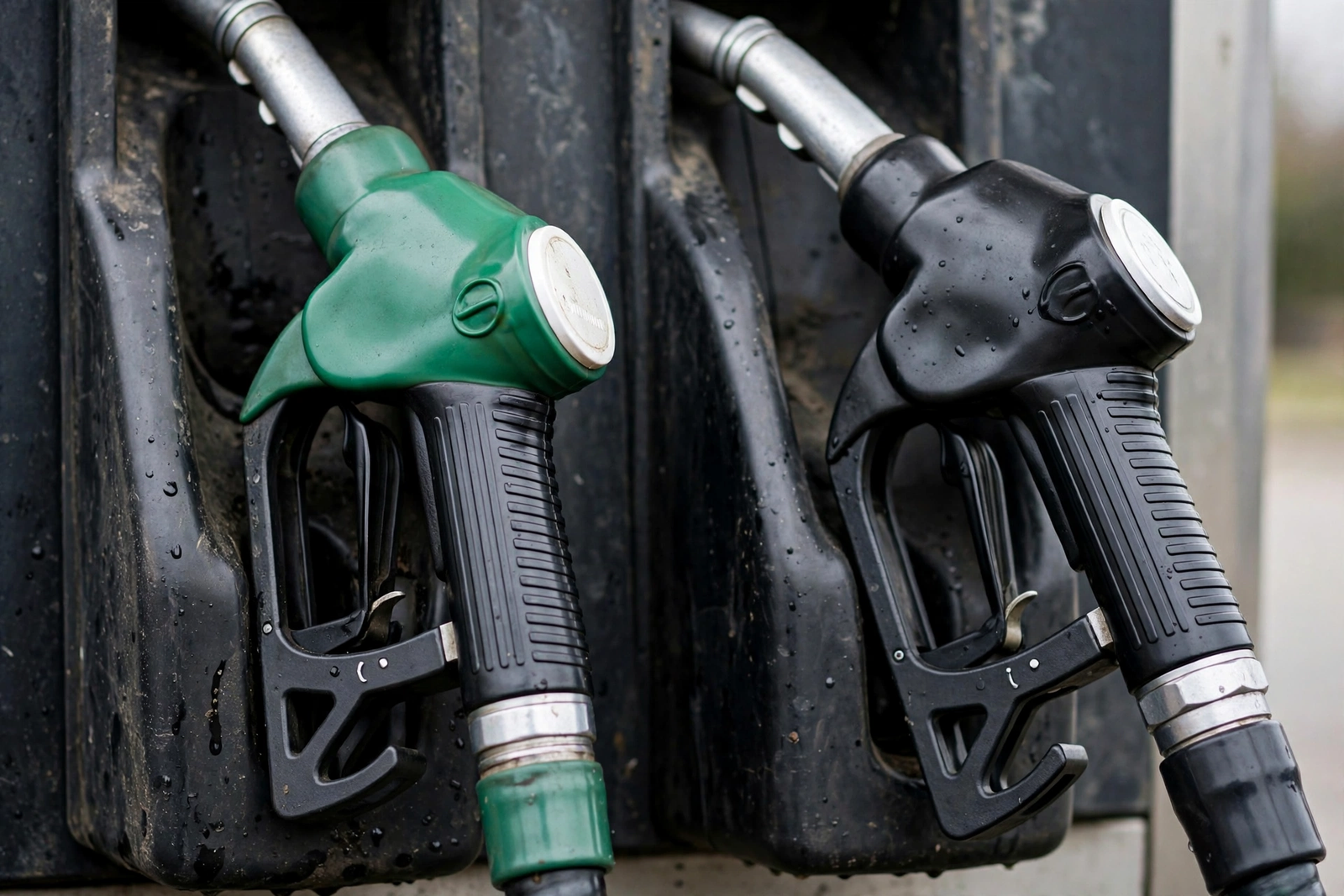
How the Two Engines Differ
Gasoline engines ignite fuel with spark plugs. Diesel engines compress air so intensely that injected fuel ignites on its own. That higher compression ratio, combined with diesel fuel’s greater energy density, is why diesels extract more miles from every gallon. It is also why diesel engines are heavier, more complex, and need emissions systems like diesel particulate filters (DPF) and selective catalytic reduction (SCR), which uses diesel exhaust fluid (DEF).
Total Cost of Ownership Comparison
| Factor | Diesel | Gasoline |
|---|---|---|
| Fuel economy | 20-30% better | Standard |
| Purchase price | $2,000-$5,000+ more for equivalent model | Lower |
| Fuel price per gallon | Often higher than gasoline | Usually lower |
| Annual maintenance | Roughly $1,200-$2,000 (DEF, DPF, fuel filters) | Roughly $600-$1,000 |
| Towing ability | Superior torque, better for heavy loads | Adequate for lighter towing |
| Emissions profile | Lower CO2, higher NOx | Higher CO2, lower NOx |
| Resale value | Generally holds value better | Standard depreciation |
The Mileage Break-Even Rule
Industry analyses put the break-even point at roughly 15,000 to 25,000 miles per year. Below about 15,000 miles a year, gasoline almost always wins on total cost. Between 15,000 and 25,000 miles it is a toss-up depending on the specific models and local fuel prices. Diesel starts to pull ahead above 30,000 miles a year, especially with regular heavy towing. A University of Michigan study found diesels had 12 to 27 percent lower fuel costs over three to five years for passenger cars and SUVs, along with better resale, but higher combined insurance, repair, and maintenance costs. The savings are real but conditional.
Running the Numbers: A Quick Example
Take a driver comparing a gas and diesel version of the same heavy-duty pickup, driving 12,000 miles a year mostly unloaded. The diesel costs roughly $4,000 more at purchase. Even if the diesel saves 3 mpg, the per-gallon diesel price premium shrinks the fuel savings to a few hundred dollars a year, while the diesel’s extra maintenance (DEF refills, fuel filters, pricier oil changes) can cost several hundred more annually. At that pace, the payback period stretches past a decade. Now flip the scenario: the same truck towing a 12,000-pound trailer for 25,000 miles a year. The diesel’s efficiency edge and towing comfort compound quickly, and the payback can arrive in a few years. Same two trucks, completely different answers. That is why mileage and towing, not brand loyalty, should drive the decision.
Who Should Buy Diesel
Buy diesel if you tow heavy trailers or fifth wheels regularly, if you log serious highway miles every year, or if you keep vehicles for a decade and want maximum durability. Long-haul commuters and RVers are the classic diesel buyers, and they are the ones who see the fuel savings. Commercial and fleet operators fall in this camp too.
Who Should Buy Gasoline
Buy gasoline if you mostly drive in the city or on short trips, if you tow only occasionally and lightly, or if you trade vehicles every few years. Short-trip diesels are particularly unhappy: their emissions systems need sustained highway driving to complete DPF regenerations, and lots of cold short runs cause expensive problems. For the average commuter, gasoline is cheaper to buy, cheaper to maintain, and simpler to own.
What About the Pump Price Gap?
Diesel fuel is frequently priced above gasoline in the U.S., which eats into the efficiency advantage. Before buying, check your local price spread over a few months, not just one day. If you are shopping for a diesel, find diesel stations near you, and note that modern diesels need diesel exhaust fluid (DEF), a consumable you will buy at auto parts stores and truck stops. Compare everyday prices with our gas station finder, and see our cheap gas guide for ways to cut fuel costs on either fuel type.
Do diesels really last longer than gas engines?
Diesel engines are built to withstand higher compression and tend to have long service lives, which contributes to their stronger resale values. But modern emissions equipment (DPF, SCR, DEF systems) adds repair risk that older simple diesels never had. Longevity now depends heavily on proper maintenance and driving patterns.
Is diesel better for the environment?
It is mixed. Diesels produce less CO2 per mile thanks to better efficiency, but more nitrogen oxides (NOx) and particulates, which is why modern diesels need DEF and particulate filters. Whether one is “cleaner” depends on which pollutant you weight more heavily.
Can I save money buying a used diesel?
Sometimes, but inspect carefully. Diesels hold their value well, so the used price premium is real, and a neglected diesel with DPF or injector problems can erase every dollar of savings. Get a pre-purchase inspection from a diesel specialist, not a general shop.
Are diesel cars still sold in the U.S.?
Diesel passenger cars have nearly vanished from the U.S. market. Diesels survive mainly in heavy-duty pickups, full-size SUVs like the Tahoe and Yukon, and commercial vehicles. If you want a diesel, you are almost certainly shopping trucks.
Facts verified October 2026. Always follow your vehicle’s owner’s manual for fuel requirements.