
If your car starts sputtering, stalling, or throwing a check engine light within minutes of leaving a gas station, contaminated fuel is the prime suspect.
Bad gas is rare, but it happens. Water, sediment, or degraded fuel in an underground tank can end up in your car, and the symptoms usually show up fast, often before you get a few miles down the road. The good news is that most cases are fixable if you act quickly. Here are the seven signs to watch for and exactly what to do about them.
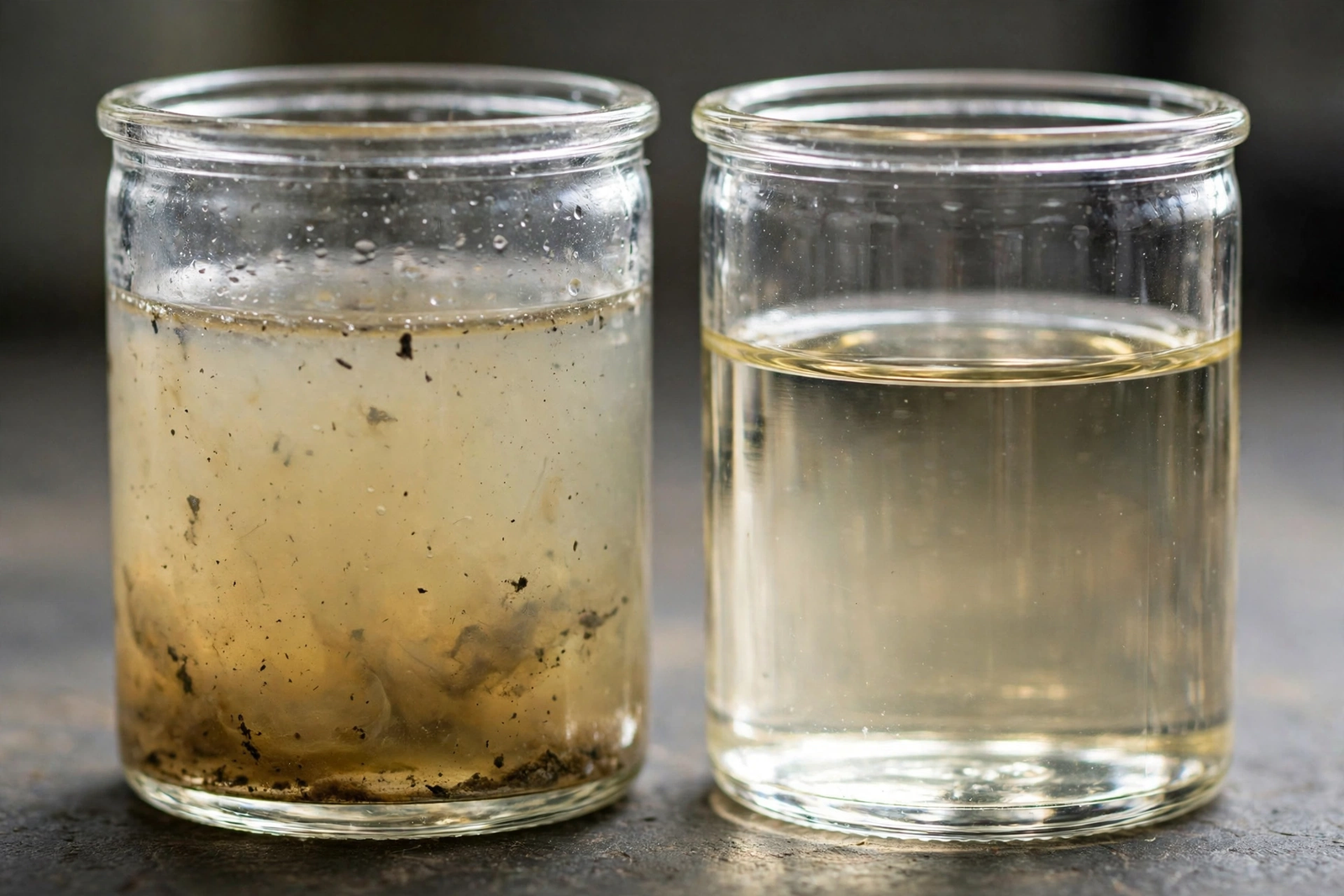
1. Engine Sputtering or Surging
The most common early sign is the engine sputtering during acceleration or surging at a steady speed. Contaminated fuel disrupts the combustion cycle, so the engine stumbles as it tries to burn fuel that does not burn cleanly. If the sputtering started right after a fill-up, fuel quality should be your first thought, not spark plugs.
2. Stalling at Idle or Low Speed
Water or debris in the fuel can clog the fuel filter or injectors enough to starve the engine at idle. If your car dies at stoplights but restarts, then dies again, contaminated fuel is a strong possibility. Do not keep restarting and driving; every mile pushes bad fuel deeper into the system.
3. Hard Starting
Difficulty cranking, especially hot restarts, is another classic symptom. Bad fuel does not vaporize and ignite the way fresh gasoline does, so the engine struggles to catch. If the car started fine all day and suddenly will not start right after fueling, suspect the tank you just filled.
4. Loss of Power and Poor Acceleration
Contaminated fuel delivers less energy per combustion event, so the car feels sluggish and hesitant, particularly under load like climbing hills or merging. This is different from the gradual power loss of a wearing engine; it is sudden and tied to the last fill-up.
5. Check Engine Light
The onboard computer watches combustion quality closely. Bad fuel commonly triggers misfire or fuel-mixture codes (often in the P0300, P0171, or P0172 range). A steady light means get the car diagnosed soon.
6. Strange Noises from the Fuel Pump
A whining or unusually loud fuel pump can mean it is struggling to push contaminated fuel through a clogging filter. The pump relies on fuel for cooling and lubrication, so bad fuel can wear it out faster. Do not ignore this one.
7. Noticeable Drop in Fuel Economy
If your mileage falls off a cliff on a single tank, the fuel itself may be the problem. Water dilution or degraded fuel simply produces less energy, so the car burns more of it to do the same work.
What to Do If You Got Bad Gas
First, stop driving as soon as it is safe. Limiting miles limits damage. Second, save your receipt and note the station, pump number, time, and mileage. Take photos of any dashboard warning lights while they are on. Third, have a mechanic drain the tank, replace the fuel filter, and flush the fuel system. Ask the shop to keep a sealed sample of the fuel; it is your evidence. Then contact the gas station manager and file a complaint with your state’s weights-and-measures or fuel-quality inspection office. If other drivers filled up at the same time and had the same problem, mention that too, since a pattern strengthens your case. For minor contamination, a mechanic may advise topping off with fresh fuel from a reputable station to dilute it, but severe cases need a full drain. To reduce the risk in the future, fill up at busy stations with high fuel turnover and consider sticking with Top Tier retailers. If you run equipment on ethanol blends, see our E15 guide, and you can find well-reviewed stations through our station guide.
How quickly do bad gas symptoms appear?
Usually within minutes to hours of filling up, often before you have driven more than a few miles. Symptoms that appear days later are more likely a developing mechanical issue than a single bad tank.
Can bad gas damage my engine?
Yes, if you keep driving on it. Contaminants can clog injectors, damage fuel pumps, foul oxygen sensors, and harm the catalytic converter. Water in fuel can corrode metal components. Quick action keeps a bad tank from becoming an expensive repair.
Will the station pay for my repairs?
Possibly. With your receipt, a fuel sample, and a mechanic’s report, many stations and their fuel suppliers will cover repair costs. Filing with your state’s fuel inspection agency strengthens your case. Keep all documentation from the start.
Can I just add fuel additive to fix bad gas?
Fuel additives may help with minor contamination but are not a cure for seriously bad fuel. If symptoms persist after diluting with fresh fuel, have the tank drained professionally rather than pouring in more products.
Facts verified October 2026. Always follow your vehicle’s owner’s manual for fuel requirements.