
What Is Flex Fuel? How Flex-Fuel Vehicles Work
A flex-fuel vehicle (FFV) is a car or truck engineered to run on any blend of gasoline and ethanol, from regular E10 all the way up to E85 (51% to 83% ethanol). Fill it with regular gas, E85, or any mix of the two, and the engine adapts automatically. There are roughly 21 million FFVs on US roads, about 7% of cars and light trucks, and a surprising number of their owners have no idea what they are driving.
How a Flex-Fuel Engine Adapts
The core trick is that the engine computer knows what is in the tank and adjusts. Ethanol burns differently from gasoline: it has less energy per gallon, a higher octane rating, and needs a richer fuel mixture. An FFV handles this with three upgrades over a regular car.
1. A fuel composition sensor (or a virtual one). Older FFVs used a physical sensor in the fuel line that measured the ethanol content directly. Modern FFVs do it with software: after you refuel, the computer briefly closes the evaporative purge valve, watches how the fuel trims respond, and calculates the ethanol percentage. The result is the same either way, the engine knows the blend.
2. A hardened fuel system. Ethanol is mildly corrosive to some materials, so FFVs get ethanol-resistant fuel pumps, fuel lines, injectors, seals, and gaskets from the factory. This is the part you cannot add later, and it is why converting a regular car to run E85 is not a real option.
3. Adaptive engine tuning. The ECU adjusts fuel delivery, spark timing, and cold-start strategy for whatever blend it detects. Switch from E10 to E85 at your next fill-up and the car simply recalibrates as you drive.
How to Tell If Your Car Is a Flex-Fuel Vehicle
Check any of these, in order of ease:
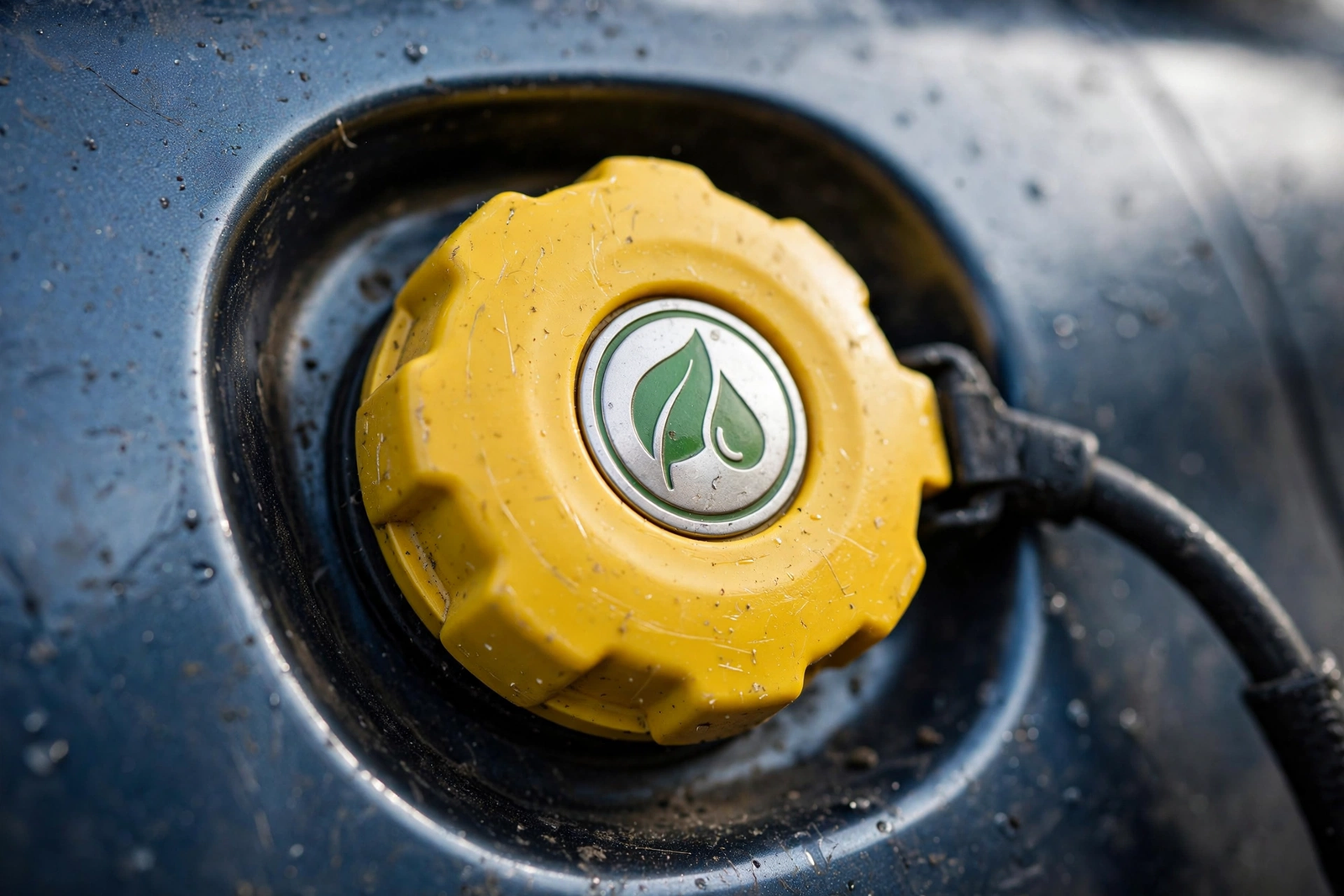
The gas cap. Most FFVs have a bright yellow gas cap, sometimes labeled E85 or FlexFuel. This is the fastest check.
Badges and labels. Look for “FlexFuel,” “FFV,” or “E85” badges on the trunk, tailgate, or fenders, and a sticker inside the fuel filler door.
The owner’s manual. The fuel section will state the approved fuels plainly. If it lists E85, you have an FFV. This is the authoritative answer.
The VIN. The 8th character of the 17-digit VIN is the engine code, and certain codes denote flex-fuel engines (for example, GM used “Z” for some 5.3L flex-fuel V8s). Because codes vary by make and year, confirm what the code means for your specific vehicle rather than guessing.
Online VIN decoders and fueleconomy.gov. The DOE and EPA’s joint fuel economy site lets you look up your exact vehicle and shows whether E85 is an approved fuel.
If none of these say flex-fuel, your car is not one. Do not run E85 in it. E85 in a non-FFV causes lean running, warning lights, hard starting, and fuel-system damage.
What Flex-Fuel Ownership Is Really Like
Fuel choice is yours. An FFV runs happily on E10, E15, E85, or anything between. Most FFV owners actually burn regular gasoline most of the time, either because they do not know their car is flex-fuel or because no E85 station is nearby.
E85 costs less per gallon but more per mile unless the discount is big. Expect 15 to 25% fewer miles per gallon on E85. The fuel only saves money when priced at least 20 to 25% below regular gasoline, a spread you will mostly find in the Midwest. Our E85 station guide walks through the full cost-per-mile math and how to find stations.
Performance is a wash for most drivers. E85’s high octane can let the engine advance timing slightly, and some tuned cars gain power on it, but a stock FFV feels about the same on either fuel.
Cold starts need the winter blend. High ethanol is hard to ignite in the cold, so winter E85 drops to about 51% ethanol. It starts reliably, at the cost of a smaller price spread over gasoline.
Maintenance is normal. FFVs do not need special service intervals for E85 use. Follow the schedule in your owner’s manual like any other car.
Should You Seek Out an FFV?
Do not buy a car just because it is flex-fuel. Buy the car you want, and treat flex-fuel capability as a free option: nice to have if E85 is cheap near you, irrelevant if it is not. The FFV badge adds no purchase cost and no maintenance burden. Its only real value is fuel flexibility, and that value depends entirely on local E85 prices. If you want to pay less for fuel regardless of what you drive, our cheap gas guide covers the strategies that work for every car, and our Top Tier gas guide explains the detergent standard that keeps any engine cleaner.
One caution for used-car shoppers: a flex-fuel badge does not mean the previous owner ever used E85, and it does not change what the car is worth. Verify the badge with the VIN and manual the same way you would verify anything else.
FAQs
Can a flex-fuel vehicle run on regular gas?
Yes, absolutely. FFVs run on regular E10 gasoline with zero issues. Flex-fuel means flexibility, not a requirement. Most FFVs spend most of their lives on regular gas.
What happens if you put E85 in a non-flex-fuel car?
The engine runs lean because the computer cannot add enough fuel for the ethanol content. Expect a check-engine light, rough running, hard starting, and possible long-term damage to fuel-system components not rated for high ethanol.
Can I convert my car to flex-fuel?
Not practically. True conversion requires ethanol-rated fuel system hardware and ECU calibration. Aftermarket kits exist but are not EPA-legal for street vehicles in most cases, and the cost exceeds any fuel savings.
Do flex-fuel vehicles get worse gas mileage?
Only when running high-ethanol blends. On regular E10, an FFV gets the same mileage as the equivalent non-flex version of the same car. The mileage penalty comes from the fuel, not the vehicle.
Facts verified October 2026. Station counts and prices vary by state and change over time.