
Is E85 Worth It? The Real Cost-Per-Mile Math
E85 is worth it only when it costs at least 20 to 25% less per gallon than regular gasoline. Any smaller discount, and you are paying more per mile, not less. That is the whole story in one sentence. The pump price of E85 looks like a deal, but E85 holds 17 to 27% less energy per gallon, so your car burns more of it. The only comparison that matters is cost per mile, and the math below shows exactly how to run it.
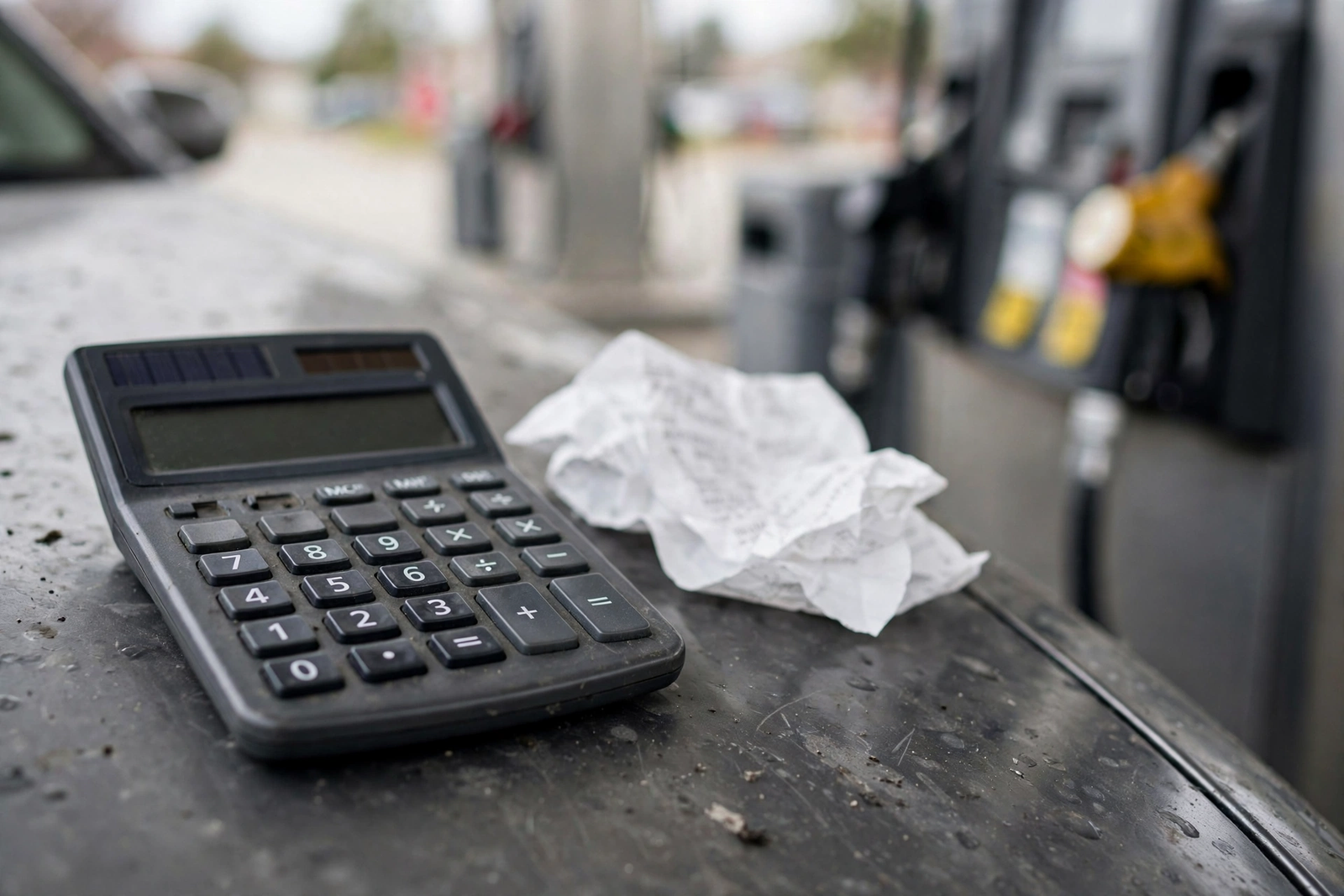
Why E85 Burns Faster
E85 is a blend of 51% to 83% ethanol (the rest is gasoline), and it is sold for flex-fuel vehicles only. Ethanol contains about 33% less energy per gallon than gasoline. The DOE’s Alternative Fuels Data Center reports that a gallon of E85 carries between 83,950 and 95,450 BTU of energy, compared with about 114,000 BTU for a gallon of gasoline. In practice, most flex-fuel vehicles get 15 to 25% fewer miles per gallon on E85 than on regular gasoline.
A truck that gets 22 MPG on regular might get 16 to 17 MPG on E85. An SUV at 25 MPG on gasoline might land near 19 MPG. Your exact penalty depends on the blend at the pump (winter E85 has less ethanol), your engine, and your driving.
The Cost-Per-Mile Formula
Forget the pump price. What you pay to drive one mile is:
Cost per mile = price per gallon / miles per gallon
Run both fuels through the formula and compare. Here is an example with typical numbers:
| Regular E10 | E85 | |
|---|---|---|
| Price per gallon | $3.20 | $2.40 (25% cheaper) |
| Fuel economy | 25 MPG | 20 MPG (20% less) |
| Cost per mile | 12.8 cents | 12.0 cents |
In this example E85 wins, but barely, and only because the discount (25%) is bigger than the mileage loss (20%). Now change the numbers slightly: if E85 is $2.70, just 16% cheaper than $3.20 regular, the math flips. E85 costs 13.5 cents per mile against 12.8 for regular. You pay more to drive the same distance, even though the pump price looks lower.
This is the mistake almost everyone makes: comparing pump prices instead of cost per mile. The sticker on the pump is advertising. The cost per mile is the bill.
The 20 to 25% Rule of Thumb
Because the average MPG penalty lands in the 15 to 25% range, E85 needs to be priced at least 20 to 25% below regular gasoline for you to break even. A bigger discount means real savings. A smaller one means E85 costs you money.
Where does that spread actually exist? Mostly in the Midwest corn belt, where ethanol is produced and E85 can run a dollar or more below regular. On the coasts, E85 stations are rare and the discount is usually too small to beat the mileage penalty. That is why the honest answer to “is E85 worth it” is: it depends on your zip code.
Beyond the Math: Other Factors
Cost per mile is the deciding factor, but a few other things belong in the decision:
Filling up more often. A 20% mileage penalty means roughly 20% more trips to the pump. If your time and the nearest E85 station matter, factor that in. Find one with our E85 station guide.
Performance. E85’s high octane lets some engines advance timing and produce slightly more power. Most drivers do not feel it, but tuned performance cars on flex-fuel setups can gain real horsepower on E85.
Emissions. E85 burns cooler and cleaner than gasoline in some respects, with lower carbon monoxide and particulate emissions. Lifecycle greenhouse gas estimates vary depending on the analysis, but the renewable content is the reason many fleets use it.
Cold weather. High-ethanol blends are harder to ignite in the cold. That is why winter E85 drops to about 51% ethanol, it starts reliably at the cost of being closer to gasoline in both energy and price spread.
Vehicle wear. A flex-fuel vehicle is built for E85: hardened fuel lines, pump, seals, and injectors, plus an ECU that reads the blend and adjusts. Running E85 in a non-flex-fuel car is never okay, and will set warning lights and can damage the fuel system.
Quick Decision Checklist
Before you fill up with E85, confirm four things:
1. Your vehicle is a flex-fuel vehicle (yellow gas cap, FlexFuel badge, or check the owner’s manual).
2. E85 at that station is at least 20 to 25% cheaper per gallon than regular.
3. You know your own MPG on both fuels, or can estimate the penalty at about 20%.
4. The station is on your route, because extra fill-ups have a cost too.
If all four check out, fill up and pocket the savings. If the discount is thin, drive past and buy regular, or look for other ways to cut fuel costs on our cheap gas guide.
FAQs
How much cheaper does E85 need to be to save money?
At least 20 to 25% cheaper per gallon than regular gasoline. That is the break-even range for the typical 15 to 25% mileage penalty. Smaller discounts mean higher cost per mile.
Can I use E85 in a regular car to save money?
No. E85 is only for flex-fuel vehicles. In a regular car it can cause poor performance, hard starting, warning lights, and fuel-system damage. The savings are never worth the repair bill.
Why is E85 cheaper in some states than others?
E85 is cheapest near ethanol production in the Midwest, where transport costs are low and competition is high. In coastal states, fewer stations and longer supply chains keep the price closer to regular gasoline.
Does E85 damage flex-fuel engines?
No. Flex-fuel vehicles are engineered for it, with ethanol-resistant fuel system parts and software that adapts to any blend. Running E85 in an FFV will not harm the engine.
Facts verified October 2026. Station counts and prices vary by state and change over time.