
The most common reason your check engine light comes on right after fueling is a loose, missing, or damaged gas cap, and tightening it until it clicks often fixes the problem.
Your car’s evaporative emissions system (EVAP) is a sealed system that captures fuel vapors and routes them back to the engine instead of letting them escape. When the gas cap is not sealed, the computer detects the leak during its routine pressure tests and turns on the check engine light. Before you assume an expensive repair, check the cap. It is the cheapest fix in the book and it works more often than most drivers expect.
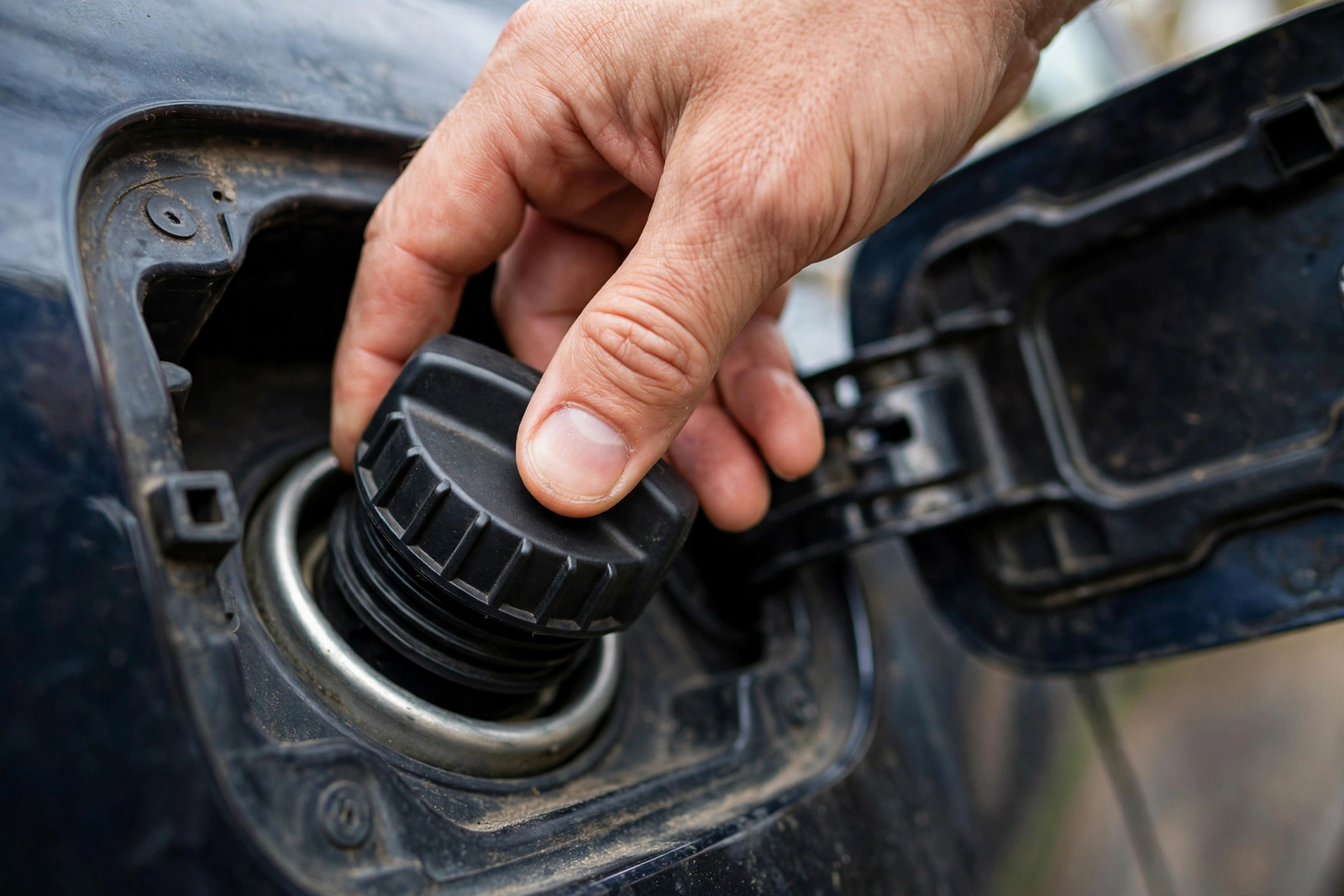
Fix 1: Tighten or Replace the Gas Cap
Remove the cap, inspect the rubber gasket for cracks or damage, and reinstall it, turning until you hear several clicks. If the gasket is cracked or the cap is visibly worn, buy a replacement; gas caps are inexpensive at any auto parts store. After tightening, the light may not turn off immediately. The computer needs to run its EVAP self-test, which typically takes a few drive cycles, meaning a few normal trips with the engine fully warming up and cooling down. If the light clears within a day or two of driving, the cap was the problem.
Fix 2: Stop Overfilling the Tank
If you habitually squeeze in extra fuel after the nozzle clicks off, stop. Overfilling can push liquid fuel into the charcoal canister, which is designed to absorb vapors, not liquid. A saturated canister disrupts the whole EVAP system and can trigger the light. Worse, replacing a damaged charcoal canister costs hundreds of dollars. The nozzle’s automatic shutoff is the full point; treat it that way.
Other Causes Worth Knowing
If the cap is fine and the light stays on, the next suspects are EVAP system components. A stuck purge valve, a leaking charcoal canister, or a cracked vacuum hose can all set similar codes, commonly in the P0440 to P0457 range, such as P0455 for a large leak. A mechanic can smoke-test the system to find the leak. Another possibility is contaminated fuel: if the light appeared along with sputtering or stalling right after a fill-up, the fuel itself may be bad. In cars that require premium fuel, using regular by mistake can cause knock-related codes, so check that you used the right grade per your owner’s manual. If fuel quality worries you, fill at Top Tier stations, compare prices with our cheap gas guide, or use the station finder to locate a reputable stop.
When to See a Mechanic
A steady check engine light means something needs attention soon, but you can usually drive to a shop. Many auto parts stores will read the code for free, which tells you whether it is an EVAP leak code or something else. If the code points to the gas cap circuit and you just replaced the cap, the system may need a few more drive cycles to clear. Go sooner if you notice drivability symptoms like rough running, stalling, or a strong fuel smell, since those suggest more than a vapor leak. A flashing check engine light is different: it means active misfiring that can damage the catalytic converter. Pull over safely, shut the engine off, and call for help. Do not keep driving on a flashing light.
How long does it take for the check engine light to reset after tightening the gas cap?
Usually a few drive cycles, which can mean one to three days of normal driving. The EVAP monitor only runs under specific conditions, so it does not reset instantly. If the light is still on after several days of normal driving, the problem is likely something else.
Can a gas station attendant cause the check engine light?
Indirectly, yes. In full-service states or if someone else fuels your car, the cap may be left loose or cross-threaded. Always give the cap a twist yourself until it clicks when you get back in the car.
Will a loose gas cap hurt my car?
A loose cap alone does not damage the engine, but it lets fuel vapors escape, which wastes a small amount of fuel and increases emissions. The bigger risk is ignoring the light and missing a different, more serious problem hiding behind the same warning.
Can I pass emissions inspection with this light on?
In most states, no. An illuminated check engine light is an automatic failure in emissions testing programs. Fix the underlying issue and confirm the light stays off before your test appointment.
Facts verified October 2026. Always follow your vehicle’s owner’s manual for fuel requirements.