
Pumping gas takes about five minutes: park, turn off the engine, pay, select your fuel grade, fill until the nozzle clicks off, and replace the cap.
If you have never filled a tank before, the pump can look intimidating, but the process is the same at nearly every station in America. This guide walks through each step in order, with the safety habits that experienced drivers follow without thinking.
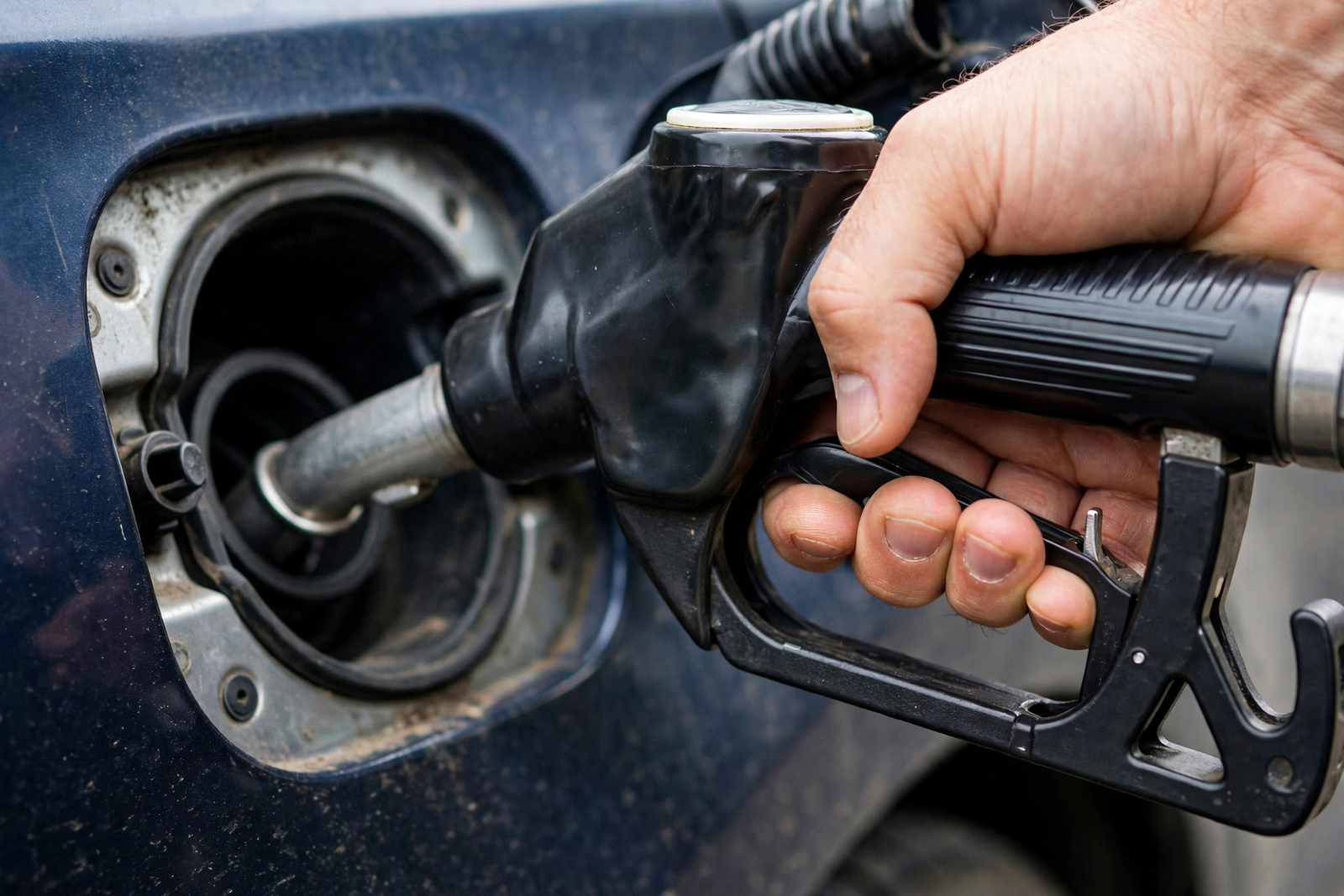
Step 1: Park and Shut Off the Engine
Pull up so the fuel door is on the same side as the pump. Your dashboard has a small arrow next to the fuel gauge icon pointing to the filler side; check it before you park. Turn the engine completely off and put the car in park. Pumping fuel with the engine running is unsafe and, in many places, against the rules.
Step 2: Pay First
Most pumps take cards at the pump. Insert or tap your card and follow the prompts. The pump may ask for your ZIP code for verification. If you are paying cash, go inside, tell the cashier the pump number and how much you want, then return to the pump. Some stations require prepayment before the pump will activate. If you are unsure which grade your car needs, check your owner’s manual; for most cars, 87 regular is correct. You can compare prices for the grade you need with our cheap gas guide or find stations through our gas station finder. Running a flex-fuel vehicle? See our E85 guide too.
Step 3: Open the Fuel Door and Remove the Cap
Open the fuel door, either by pressing it or using the release lever inside the car. Unscrew the gas cap counterclockwise and set it in the holder on the fuel door if there is one, so it does not dangle against the paint. Do not lose the cap; a missing cap will eventually trigger your check engine light.
Step 4: Select Fuel and Fill
Double-check that you are holding the gasoline nozzle, not diesel, if your car runs on gas. Diesel nozzles are usually larger and labeled clearly, but always verify. Insert the nozzle fully into the filler neck, then squeeze the handle or flip the latch to lock it on. The pump will stop automatically when the tank is full. Stand by the nozzle the whole time; never walk away or get back in the car while fuel is flowing.
Step 5: Finish Without Topping Off
When the nozzle clicks off, the tank is full. Do not try to squeeze in extra fuel. Topping off can flood the evaporative emissions system and damage the charcoal canister, which is an expensive repair. Remove the nozzle, let any drips fall, and return it to the pump. Screw the gas cap back on clockwise until it clicks, and close the fuel door.
Safety Habits That Matter
No smoking, no vaping, and no open flames anywhere near the pump. Static electricity is a real ignition risk: before you touch the nozzle, touch a metal part of the car away from the fuel door to discharge static, and do not re-enter your vehicle during fueling, since sliding across the seat can rebuild a charge. If you must get back in, discharge static again before touching the nozzle. Keep children in the car and away from the pump. In the rare event of a spill, do not start the engine; tell the station attendant.
What happens if I put diesel in a gas car?
Stop immediately and do not start the engine. Diesel in a gasoline car will not combust properly and can damage the fuel system. The tank needs to be drained by a professional. This is why you should always double-check the nozzle label before squeezing the handle.
Can I pump gas while the car is running?
No. Turn the engine off before fueling. A running engine is an ignition source near fuel vapors, and most stations prohibit it. It takes a few seconds and removes a real risk.
Why did the pump stop before my tank is full?
The automatic shutoff can trigger early if the nozzle is at an angle or if the filler neck is sensitive. Pull the nozzle out slightly, reinsert it fully, and try again at a slower flow. If it keeps cutting out, the tank may actually be full.
Do I need to get out of the car to pump gas?
In most states, yes, you pump your own fuel. A few places still have full-service options or attendants who will pump for you. When in doubt, watch what other drivers do or ask the cashier.
Facts verified October 2026. Always follow your vehicle’s owner’s manual for fuel requirements.