
Racing Fuel Near Me: Types, Octane and Where to Buy
Racing fuel is high-octane gasoline, leaded or unleaded, sold in grades from 95 to 118 octane for engines that pump gas cannot serve. You can buy it at select performance gas stations (some sell 100-octane unleaded at the pump), from brand dealers located with the Sunoco Fuel Finder or VP Racing Fuels dealer network, and online in 5-gallon pails or 55-gallon drums shipped to your door. Expect to pay several times the price of pump gas.
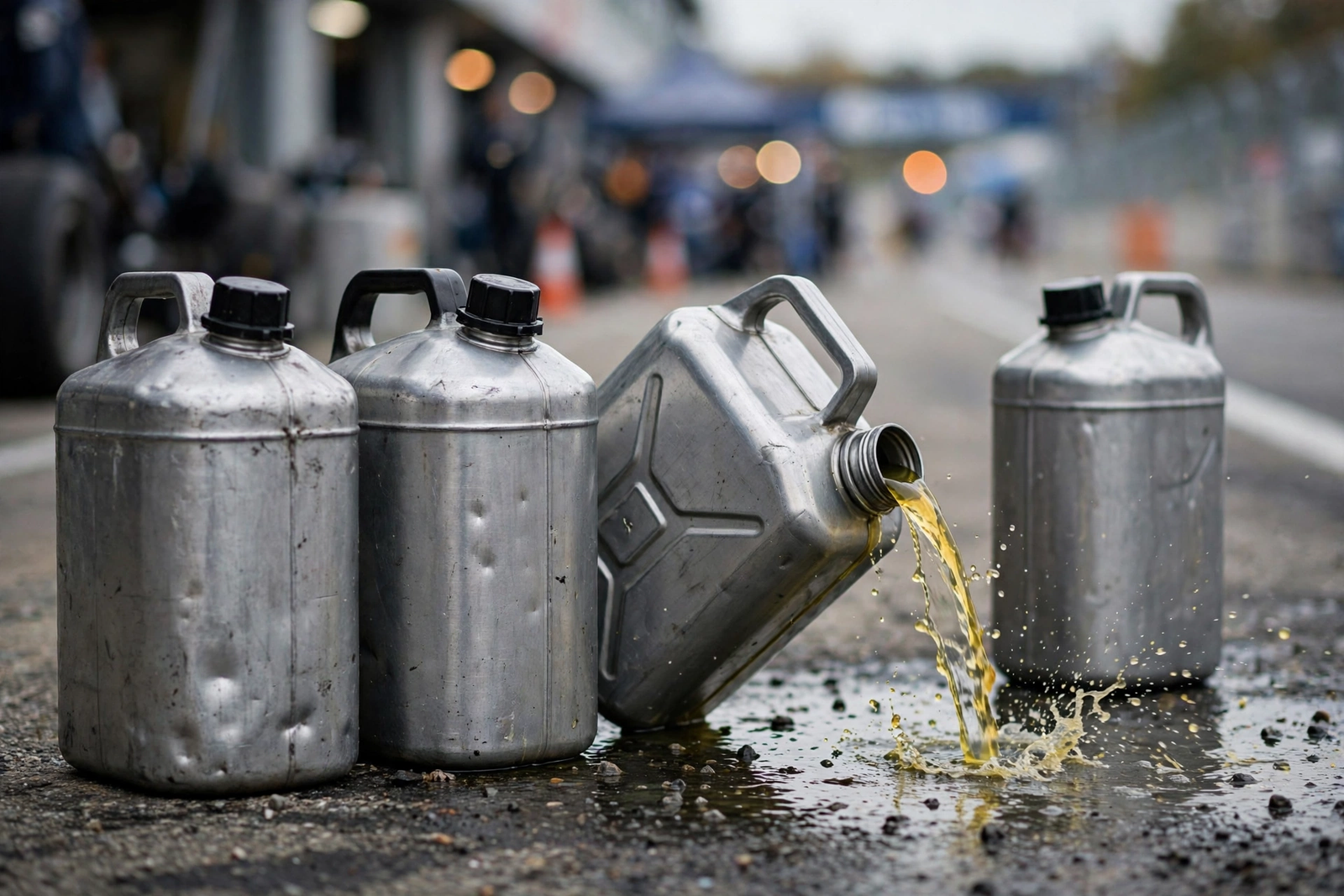
What Racing Fuel Actually Is
Race fuel is gasoline refined for consistency and knock resistance far beyond street fuel. Where pump premium tops out at 91 to 93 octane, race fuels run from about 95 octane (Sunoco Optima, aimed at powersports and stored equipment) all the way to 118 octane (Sunoco SR18, for dedicated competition engines). Common grades you will see: 100 octane unleaded (Sunoco 260 GT), 110 leaded (Sunoco Standard), and 112 leaded (Sunoco Supreme).
Octane here works the same way as at the pump: higher octane resists knock, which lets high-compression and forced-induction engines run aggressive timing and boost without destroying themselves. Race fuel also offers batch-to-batch consistency and better storage stability than pump gas, which is why some boaters and small-engine owners buy it too.
Leaded vs Unleaded: The Critical Split
Unleaded race fuel (100 octane and similar) is street-legal and safe for any engine with a catalytic converter and oxygen sensors. It is the right choice for modern performance cars, motorcycles, and boats.
Leaded race fuel (110, 112, 114 octane and up) is for race engines only. Tetraethyl lead boosts octane cheaply and cushions valves in old-school race builds, but lead destroys catalytic converters and oxygen sensors, fouls spark plugs in street engines, and is illegal for on-road use under federal law. Never put leaded fuel in a street car, a modern motorcycle, or anything with emissions equipment.
There is also oxygenated race fuel, which contains oxygen-bearing compounds for extra power in tuned engines. It is a specialty product: more power, shorter shelf life, and not what you want for storage.
Types at a Glance
| Type | Octane range | Street legal? | Typical use |
|---|---|---|---|
| Unleaded race fuel | 95 to 109 | Yes | Tuned street cars, motorcycles, boats, karts |
| Leaded race fuel | 110 to 118 | No, off-road/race only | Drag, circle track, high-compression race engines |
| Oxygenated race fuel | Varies | Usually not | Maximum-effort tuned engines |
| Ethanol race fuel (E85R, methanol) | High (equivalent) | No | Dedicated race builds with converted fuel systems |
Where to Buy Racing Fuel Near You
At the pump. A small number of performance-oriented gas stations sell 100-octane unleaded at the pump, and some sell 110 leaded for off-road use. These are most common near racetracks and in car-culture metro areas. Call ahead: availability changes, and the pump is often separate from the regular islands.
From a dealer. Sunoco Race Fuels offers a Fuel Finder that locates authorized dealers near you. VP Racing Fuels has its own dealer network, and some VP-branded stations sell race fuel at the pump. Speed shops and powersports dealers are also common stockists.
Online, shipped to your door. Retailers like Petroleum Service Company sell the full Sunoco lineup online in 5-gallon pails and 55-gallon drums, with leaded, unleaded, oxygenated, and alcohol-based fuels organized by octane. Drums are almost always cheaper per gallon than pails, and pails are cheaper per gallon than the pump.
At the track. Most racetracks sell fuel on race days, often Sunoco or VP products matched to the series running there. It is convenient but usually the priciest option per gallon.
What It Costs
Pump 100-octane unleaded typically runs around $9 to $10 or more per gallon in observed markets, and prices vary widely by region. Five-gallon pails cost less per gallon than pump fuel, and 55-gallon drums cost less still, which is why serious racers buy in bulk. Whatever the format, budget several times the price of premium pump gas. If your engine does not need it, that money is better spent elsewhere: see our cheap gas guide for saving on the fuel you actually need.
Do You Actually Need It?
Be honest about the engine. A stock or lightly modified street car gains nothing from 100 octane; the ECU cannot use octane the engine was not built for, and you are just buying expensive gasoline. You need race fuel when compression, boost, or timing exceed what 93 octane can support without knock: built engines, forced induction with aggressive tunes, and dedicated race cars.
Two legitimate non-racing uses exist. First, storage: unleaded race fuel’s stability makes it excellent for winterizing boats, mowers, and generators, similar to ethanol-free pump gas but with a longer shelf life. Second, high-compression classics without catalytic converters can run leaded race fuel the way they ran leaded pump gas decades ago, where it remains legal for off-road use.
For everything else, buy the octane your owner’s manual specifies. Higher octane is not higher quality; it is knock insurance, and you only need as much as the engine demands. If you are chasing performance on a budget, start with fresh Top Tier fuel at the correct octane before spending money on race gas.
FAQs
Can I put racing fuel in my regular car?
Unleaded race fuel will not harm a regular car, but it will not help it either. A stock engine cannot take advantage of 100 octane, so you would pay several times more per gallon for zero benefit. Leaded race fuel must never go in a street car.
Is 100 octane gas the same as racing fuel?
Essentially, yes: 100-octane unleaded at the pump (like Sunoco 260 GT) is a racing fuel product sold at retail. It is real race fuel, just in a convenient format.
How long does racing fuel last in storage?
Sealed properly, unleaded race fuel stores longer than pump gas, often a year or more, thanks to its consistency and lack of ethanol. Oxygenated fuels are the exception and should be used quickly. Check the manufacturer’s guidance for the specific product.
Is it legal to buy leaded racing fuel?
Yes, to buy and use off-road: in race cars, boats, and equipment not driven on public roads. It is illegal to use leaded fuel in any on-road vehicle under federal law, and it will destroy emissions equipment.
Facts verified October 2026. Station counts and prices vary by state and change over time.