
What Is E10 Gas?
E10 is gasoline blended with up to 10% ethanol, and it is what almost every US pump dispenses as regular gas. If you buy 87 octane in America, you are almost certainly buying E10. It is approved by the EPA for every conventional gasoline car, truck, and SUV, and it has been the national standard since 2010.
The “E” stands for ethanol and the “10” is the maximum percentage by volume. The remaining 90% is gasoline. Nearly all gasoline sold in the United States contains 10% ethanol, according to the Renewable Fuels Association, a result of the federal Renewable Fuel Standard.
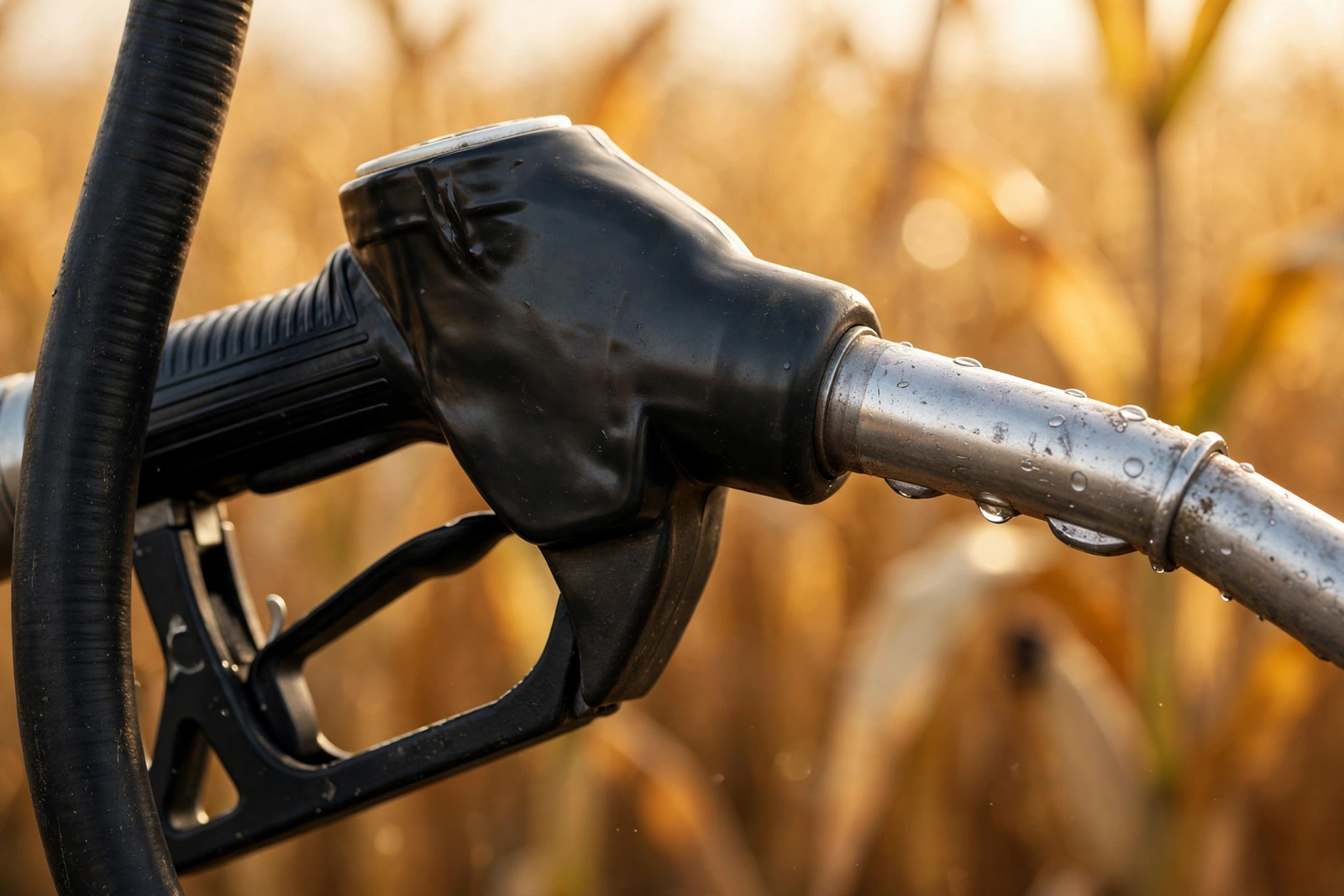
Why Ethanol Is in Your Gasoline
Ethanol is a renewable fuel made mostly from corn in the US. It has been blended into gasoline since the late 1970s, when the EPA granted a Clean Air Act waiver allowing up to 10% ethanol in motor fuel. Blenders add it for three reasons: it raises octane cheaply (pure ethanol has an octane rating near 100), it adds oxygen that helps fuel burn more cleanly, and it stretches the gasoline supply.
You may see stickers on pumps that say “contains up to 10% ethanol” or “may contain up to 10% ethanol.” That is E10. In most states the pump does not have to spell it out, because E10 is simply the default fuel.
Is E10 Safe for My Car?
Yes. E10 is approved for use in all conventional gasoline-powered vehicles, and automakers have certified their cars for E10 for over 40 years. Some manufacturers even recommend it. If your car is not a flex-fuel vehicle and was built in the last three decades, E10 is the fuel it was designed around.
There are limits. E10 is the maximum ethanol blend approved for motorcycles, boats, lawnmowers, chainsaws, and other small engines. Federal rules do not allow E15 in those engines, and E85 is strictly for flex-fuel vehicles.
E10 vs E0, E15, and E85
Fuel names describe ethanol content, not quality. Here is how E10 fits among the blends you will see at the pump:
| Fuel | Ethanol content | Who can use it |
|---|---|---|
| E0 (ethanol-free) | 0% | Any gasoline engine; best for boats and small engines |
| E10 (regular) | Up to 10% | Every gasoline car, truck, and SUV |
| E15 (Unleaded 88) | Up to 15% | Cars and light trucks, 2001 and newer |
| E85 (flex fuel) | 51% to 83% | Flex-fuel vehicles only |
For the full head-to-head comparison, see our E15 gas station guide and our E85 station guide. If you need fuel without any ethanol at all, check our ethanol-free gas station guide.
E10 and Fuel Economy
Ethanol contains about 33% less energy per gallon than gasoline, so a gallon of E10 holds about 3% less energy than a gallon of pure gasoline. In practice that means roughly 3% fewer miles per gallon compared with ethanol-free fuel, according to DOE data.
In the real world, most drivers never notice the difference. The MPG gap between E10 and E0 is far smaller than the gap caused by driving style, tire pressure, or a roof rack. E10 is also priced lower than ethanol-free gasoline at most stations, and at many stations it is the only option on the regular pump.
Storing E10 Gasoline
The one real weakness of E10 is storage. Ethanol attracts water from the air, and if E10 sits unused for a couple of months or more, the water it absorbs can cause phase separation: the ethanol and water drop to the bottom of the tank, octane falls, and the leftover gasoline may not run your engine well. That is why boats, mowers, and generators that sit for months do better on ethanol-free fuel.
For your car, which you drive regularly, storage is a non-issue. For seasonal equipment, use a fuel stabilizer or fill up with ethanol-free gas before storage.
FAQs
Is E10 the same as regular unleaded?
Yes, in practice. Regular unleaded 87 octane at nearly every US station is E10, gasoline with up to 10% ethanol. “Regular” describes the octane grade; “E10” describes the ethanol content.
Can I use E10 in an older car?
Most cars built since the 1980s handle E10 without problems, and all modern cars are certified for it. If you own a classic car that sits for months, ethanol-free fuel or a stabilizer is the safer choice for storage.
Does E10 damage engines?
No, not in vehicles designed for it. Ethanol is mildly corrosive to some older rubber and plastic fuel-system parts, but modern cars use ethanol-resistant components. Small engines and marine engines not rated for ethanol are the exception.
Is E10 bad for the environment?
E10 reduces tailpipe carbon monoxide emissions and replaces some petroleum with renewable fuel. Its full lifecycle emissions depend on how the corn is grown and processed, and estimates vary, so the honest answer is that it is an improvement over pure gasoline on some measures and debated on others.
Facts verified October 2026. Station counts and prices vary by state and change over time.