
If you run out of gas on the highway, get as far right as you safely can, turn on your hazard lights, stay in the car if traffic is close, and call for help. Do not try to coast to the next exit or walk along a busy highway to find fuel.
When the engine dies, you lose power steering and power braking help, which makes the car harder to steer and stop. AAA warns that a stalled car on a busy road can put the driver and passengers in danger. Your first job is to get out of moving traffic, not to save the trip.
Get off the road safely
As soon as the engine sputters, turn on your hazard lights and use your remaining momentum to steer toward the right shoulder. AAA advises drivers to coast to the right shoulder and avoid braking until it is necessary to stop. Do not swerve across lanes, and do not try to reach an exit that is still far away.
Pull as far right as you can, onto level ground if possible, and well clear of the travel lanes. Put the car in park, apply the parking brake, and keep your hazards on. If you have reflective triangles or flares and you can place them safely from the passenger side, set them out behind the car.
If you cannot reach the shoulder and you are stuck in a lane, stay belted in the car with hazards on and call 911 right away. Do not get out into moving traffic to push the car, and never stand behind the car in a live lane.
Stay safe while you wait
On a highway, the car is usually safer than the roadside. Insurer guidance from NJM says that in a remote area you should stay in the car with the doors locked until help arrives. If you must get out, exit through the passenger side and move behind a guardrail if one is close and safe to reach.
Save phone battery for calls. Tell someone where you are, including the highway name, direction of travel, nearest exit, or mile marker. Your phone GPS can pin down that location for a dispatcher. Be careful with offers of help from strangers. It is fine to talk through a partly open window and politely decline if you are uncomfortable. Wait for a marked roadside truck, a highway patrol officer, or a friend you called yourself.
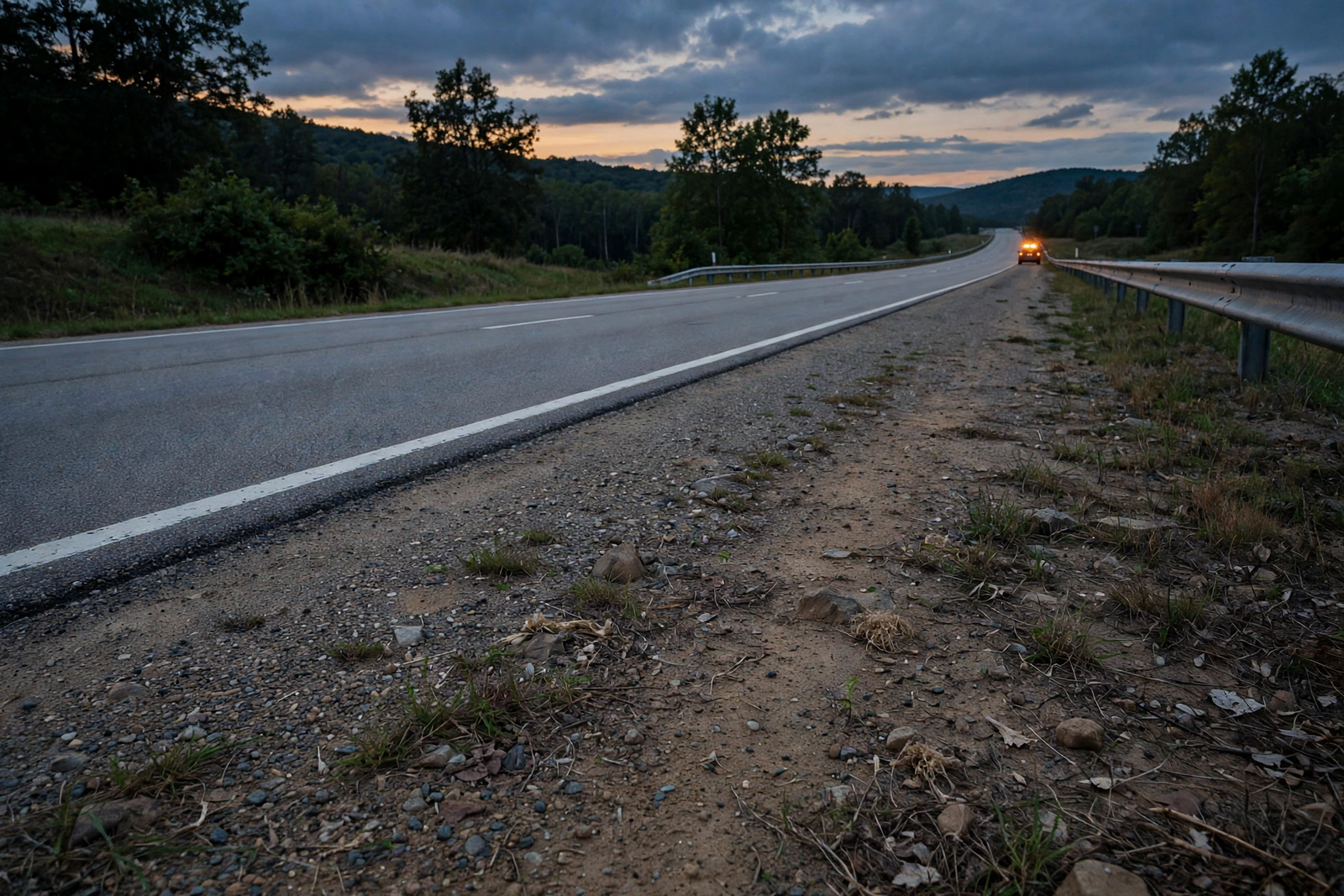
Who to call, in order
| Who to call | When to use them | What they can do |
|---|---|---|
| Roadside assistance plan | You have AAA, insurer cover, or a carmaker plan | Bring fuel or tow you to a station |
| A friend or family member | Someone nearby can bring an approved gas can | Drive fuel to you or drive you to a station |
| A local tow company | No plan, or no fuel delivery is available | Deliver fuel or tow the car to a station |
| 911 or highway patrol | You are in a lane, in danger, or have no signal | Send police or a highway safety patrol |
Give the dispatcher your exact location, car make and color, and whether you need gasoline or diesel. AAA brings about 1 to 2 gallons, enough to reach the nearest station. Plus and Premier members receive that fuel at no extra fuel cost, while Basic members pay the pump price. Amounts vary by AAA club, with some clubs reporting up to 3 gallons, so check your own plan.
Fuel delivery and getting fuel another way
Roadside fuel delivery is the simplest highway option. The crew brings a small amount of fuel, enough to reach the next station, and you fill up properly there. It is not a full tank service, so head straight to a station once you can drive.
If a friend brings fuel, use only an approved gasoline container, keep it upright, and pour slowly on level ground. Put the container in the trunk after pouring, get back in the car, and do not smoke or use open flames near the tank. Never use an unapproved container or pour fuel while the engine is running. If you have a diesel car, say so when you call, because diesel delivery may not be available everywhere and the wrong fuel can cause serious damage. Our diesel guide covers diesel pumps, and cheap gas near you can help you find a station once you are moving again.
What not to do
Do not try to coast to the nearest station once the engine has died, because steering and braking are much harder without engine power and you could stall in a lane. Do not keep cranking the engine, because that drains the battery. Do not walk along a busy highway if help can reach you, do not leave children or pets alone in a hot car, and do not accept fuel from a stranger in an unmarked container.
Restarting after you have fuel
Check your owner manual before you restart. Some cars need a few tries before fuel reaches the engine, and some newer cars have a fuel system reset step in the manual. Insurer guidance from NJM describes pressing the accelerator a few times, turning the key or pushing the starter button, waiting several minutes if it does not catch, and trying again. That advice does not fit every modern car, so your manual wins if the two differ.
If the engine starts, let it idle briefly and listen for rough running. If it stalls again, do not keep forcing it. A tow is cheaper than more damage from a clogged filter or damaged pump. If it runs smoothly, drive directly to a station and fill up. To avoid this next time, follow the quarter tank rule AAA recommends.
FAQ
Should I stay in the car if I run out of gas on the highway?
Yes, in most cases. Stay belted in with hazards on if traffic is close.
Who brings gas if I run out?
A roadside plan such as AAA, your insurer service, or a local tow company. AAA typically brings about 1 to 2 gallons, enough to reach the nearest station.
Will my car start right away after I add gas?
Often it takes a few tries. Check your manual, try again after a short wait, and call for a tow if it still will not start.
What if I run out of gas in a lane?
Stay in the car with hazards on and call 911. Do not get out into moving traffic.
Facts verified October 2026. Pull over, hazard, and call for help steps come from AAA and insurer safety guides, and fuel delivery amounts come from AAA club pages.